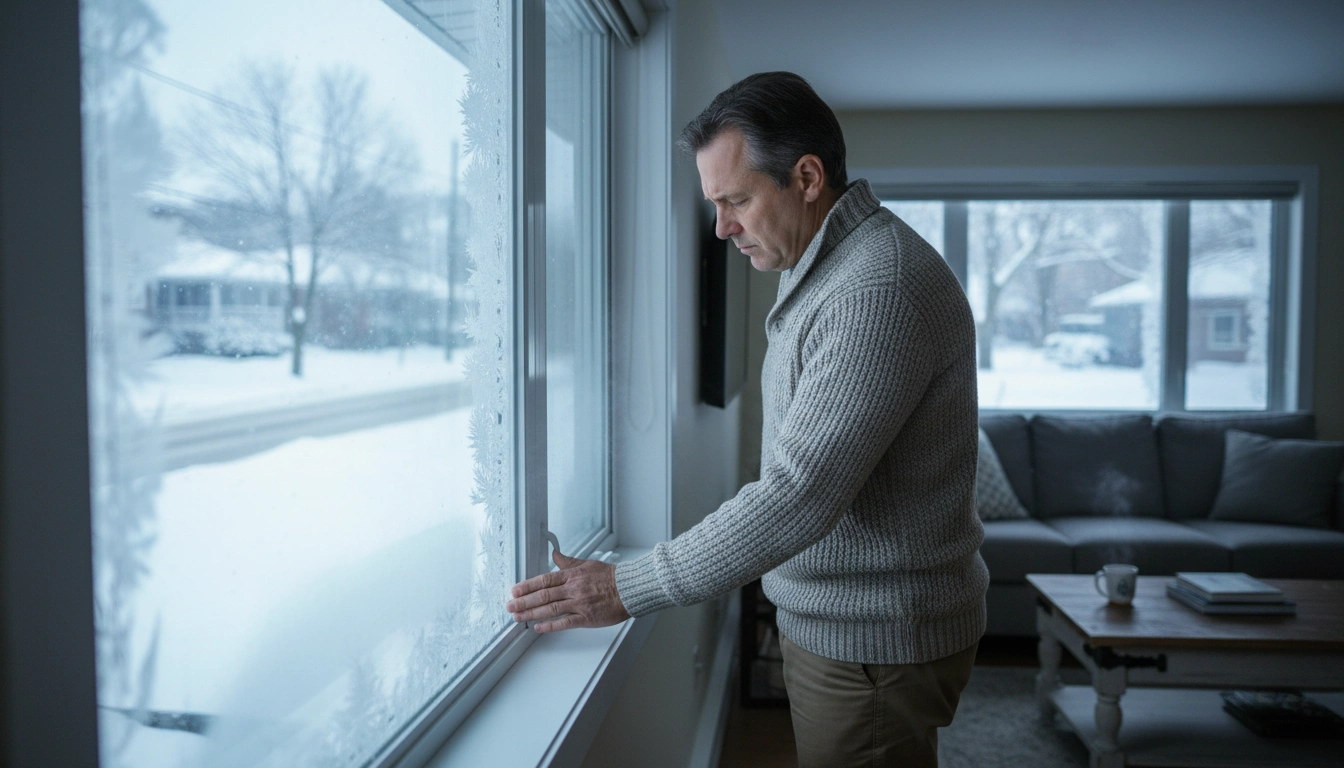
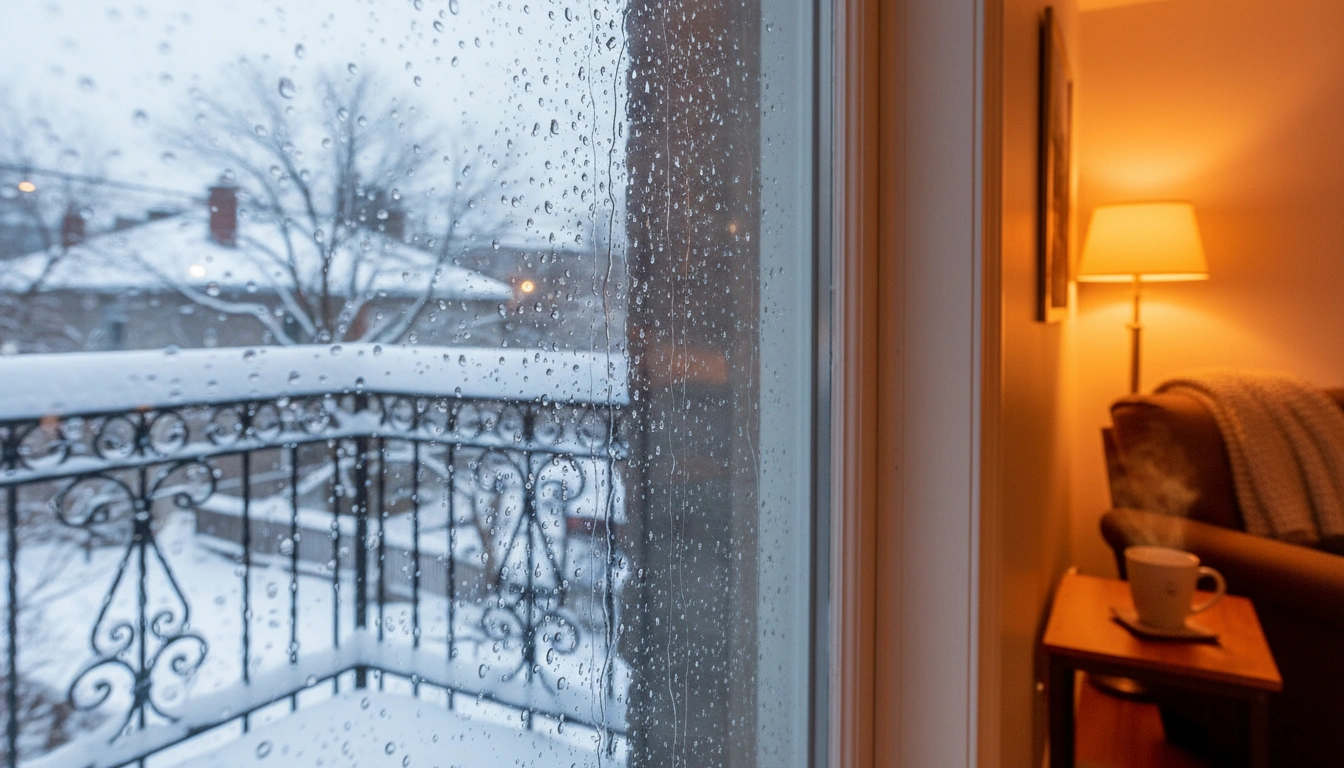
In Montreal, where average January temperatures hover around −9°C and dip as low as −16°C, your windows account for up to 35% of home heat loss. Addressing window issues proactively can yield energy savings of 7–12% or more.
1. Window Air Leakage: Feeling Drafts and Cold Spots
Air leakage allows outdoor cold to infiltrate homes during temperature swings. A candle flame test can detect air leaks around window frames. Air leaks can account for 10–25% of heating loss. Modern UPVC windows with multi-chamber frames and airtight seals eliminate drafts.
2. Foggy Glass and Moisture Buildup
Condensation occurs when warm indoor air meets cold glass surfaces. Freeze-thaw cycles crack seals, allowing moisture between panes. Triple-glazed windows with Low-E coatings can cut energy loss by up to 50%.
3. Rising Energy Bills
Outdated windows contribute to 25–30% of residential energy use in Canada. Montreal homeowners could save $101–$583 annually by upgrading to ENERGY STAR models. Homes with 20+ year-old windows often experience 30–40% more heat loss during winter peaks.
4. Difficulty Operating Windows
Windows should operate smoothly; sticking or jamming signals wear. Warped frames from humidity and rusted hardware are common issues in Montreal’s climate. Replacement with casement or awning styles restores functionality and security.
5. Visible Damage: Cracks, Rot, or Decay
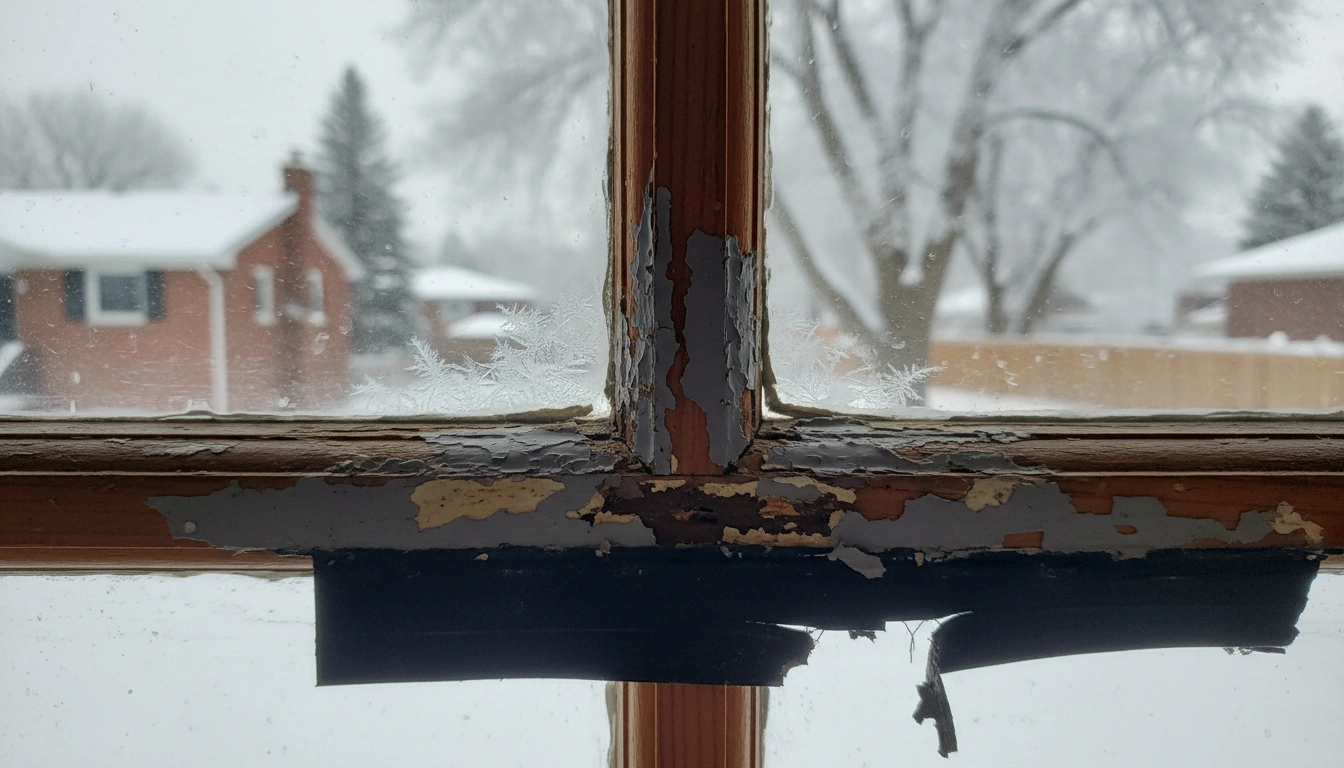
Cracked glass, rotting frames, and peeling paint signal urgent replacement. Montreal’s harsh environment accelerates physical deterioration.
| Damage Type | Common Cause in Montreal | Potential Impact |
|---|---|---|
| Cracked Glass | Freeze-thaw stress | Energy loss, safety hazard |
| Frame Rot | Moisture from condensation | Structural weakness, mold |
| Peeling Seals | UV exposure and age | Increased drafts, higher bills |
6. Excessive Noise Intrusion
Proximity to busy streets increases outside noise penetration. Energy-efficient upgrades can reduce noise by 50% or more through thicker glazing and tight seals.
7. Outdated Style or Poor Curb Appeal
Dated windows typically lack efficiency alongside aesthetic appeal. Modern options like picture or bay windows add elegance while delivering energy benefits.
Best Time for Window Replacement
Spring and fall are optimal when temperatures range 10–20°C. Mild weather allows seamless installation without extreme cold disruption. Benefits include UV protection, reduced carbon footprint, and eligibility for rebates.