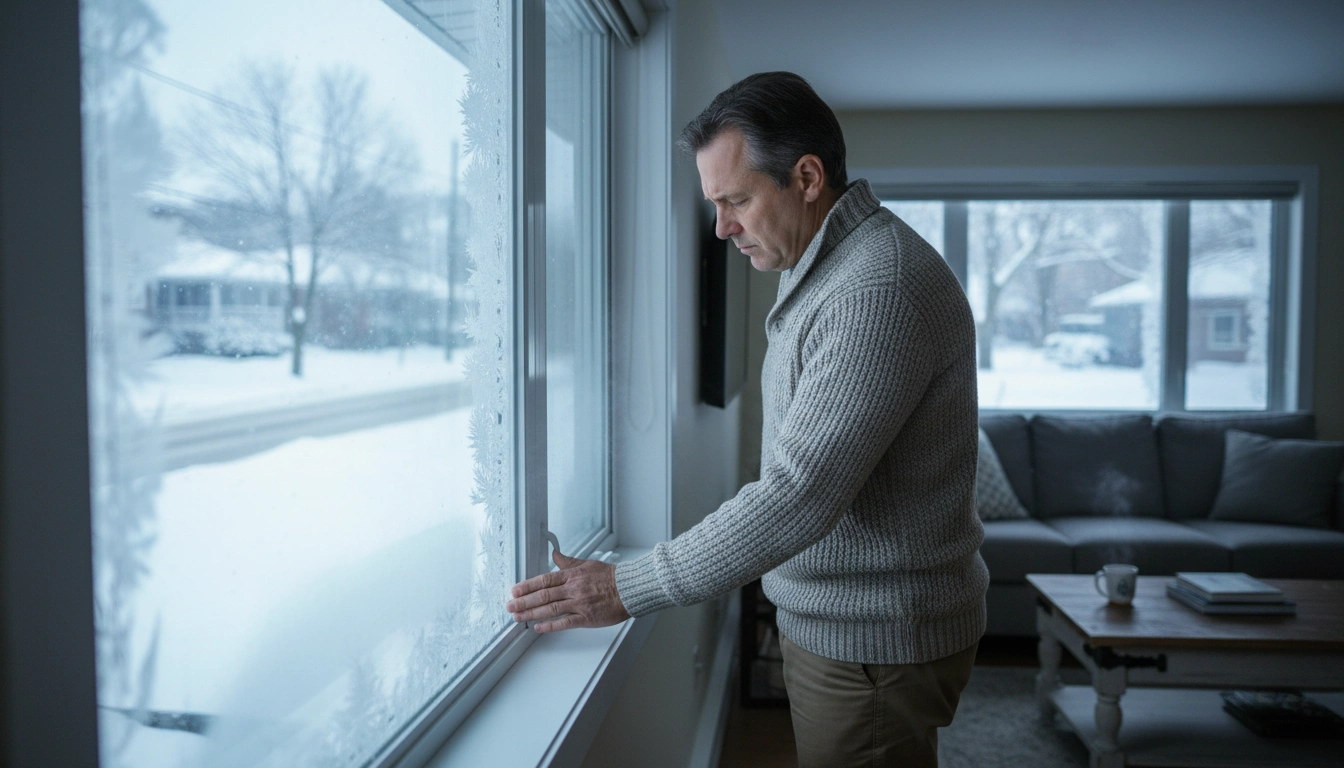
If you have ever wiped away foggy droplets from your living room panes on a crisp February morning, you are not alone – it is a common frustration for many Greater Montreal homeowners. Condensation occurs when warm, moist indoor air contacts cooler surfaces, forming water beads that can drip, freeze, or foster mold. In Quebec residences, this often signals inefficiency, where windows contribute to up to 25% of heat loss, hiking energy bills and compromising air quality.
Montreal’s climate, with January averages around −9°C and frequent dips to −16°C or lower, intensifies the problem through extreme temperature contrasts and freeze-thaw cycles. Left unchecked, condensation risks health issues from mildew or structural damage like rotting frames.
Window Air Leakage Problems: How Drafts Fuel Moisture Buildup
One sneaky culprit behind foggy glass is air infiltration, where gaps in seals or frames allow chilly outdoor air to mix with your warm interior, cooling the pane and inviting droplets. In Montreal’s windy suburbs like West Island or Pointe-Claire, this leakage not only worsens fogging but creates cold spots that make your space feel drafty and uneven.
- Frost or ice on interior edges: During deep freezes, this indicates severe leaks.
- Higher heating costs: Leaks can boost energy use by 10–25%, adding hundreds to annual Hydro-Québec tabs.
- Damp sills or mold growth: Trapped moisture breeds bacteria and allergens.
Quick DIY check: Use an incense stick or candle flame near window edges – if it wavers, air is sneaking through.
Spotting these leaks early is critical. Read our detailed post on window air leakage problems in Montreal homes for more red flags.
Common Causes of Condensation in Montreal’s Challenging Climate
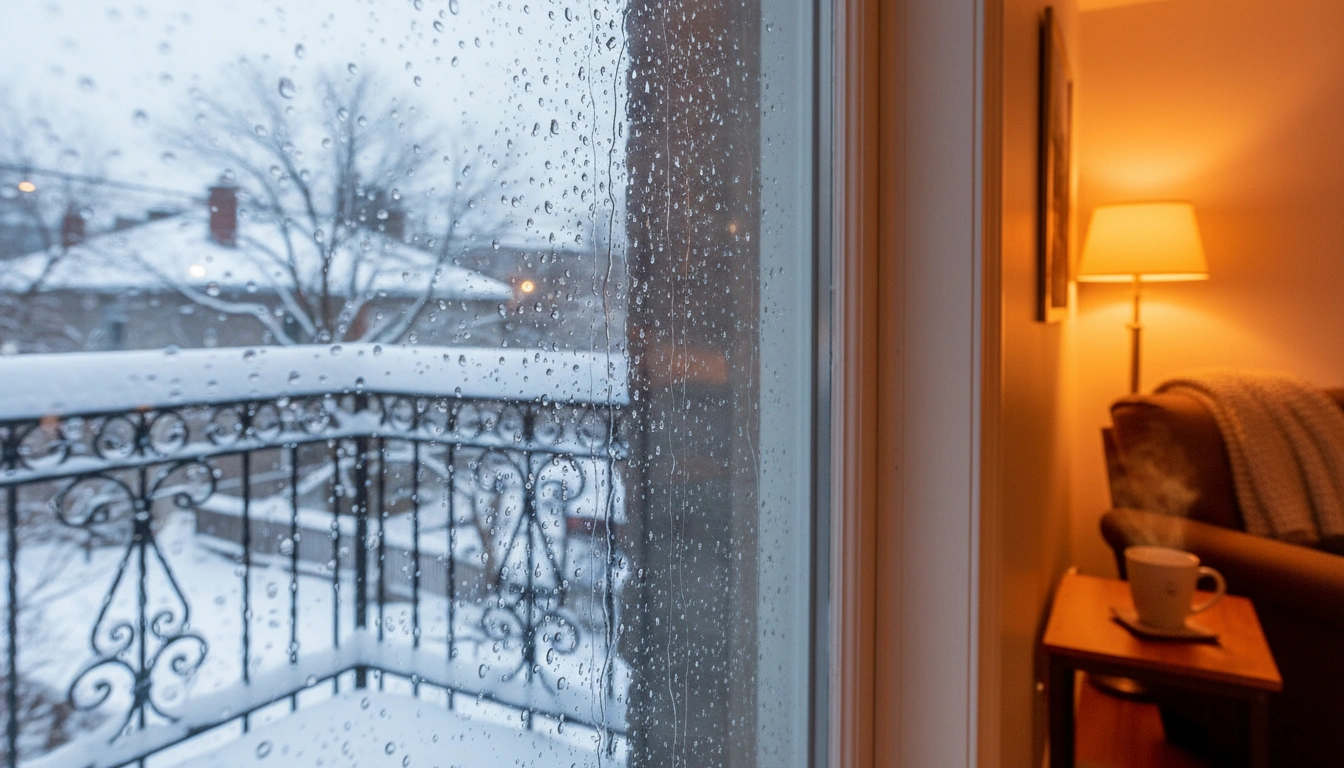
Beyond leaks, several factors conspire to create misty windows. High indoor humidity – from showers, cooking, or even laundry – builds up in tightly sealed homes, especially without proper venting. When this moist air hits cold glass, cooled by prolonged winters (December to March often below 1°C), it condenses like dew on a chilled drink.
- Extreme weather swings: Freeze-thaw cycles crack seals, allowing moisture between panes – a permanent fog signal.
- Over-humid interiors: Without exhaust fans or HRV systems, levels climb, promoting fog and health risks.
- New builds: Temporary high moisture from curing materials, but persistent issues point to design flaws.
Energy Efficient Windows Benefits: Cutting Fog and Costs
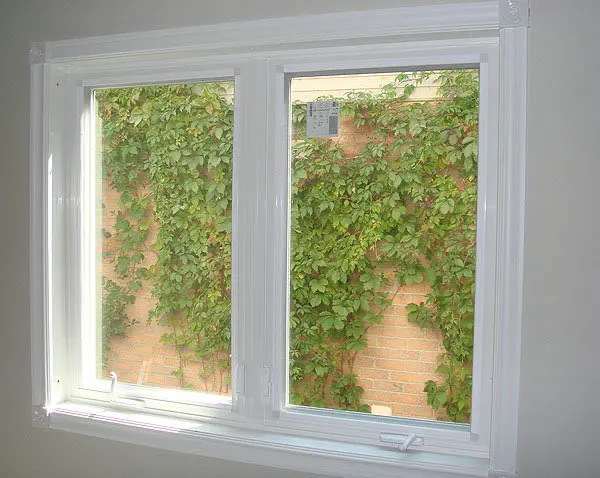
Switching to high-performance models is a game-changer, as they maintain warmer glass surfaces, thwarting droplet formation. ENERGY STAR-certified options reduce heat loss by 20%, keeping interiors drier and slashing heating bills by up to 10% – equating to $200–$600 yearly savings for a Montreal home.
- Enhanced insulation: Minimizes temperature drops, curbing mold and improving air quality.
- Noise reduction: 20–50% quieter, creating calmer havens amid urban buzz.
- Boosted home value: Efficient features appeal to buyers, recouping 10–15% on resale.
- Rebates: Quebec’s Rénoclimat offers $150 per rough opening in 2026, plus up to $5,000 federally via Canada Greener Homes.
Explore more in our guide on energy-efficient windows benefits.
Triple Pane Windows Explained: Advanced Barriers Against Dampness
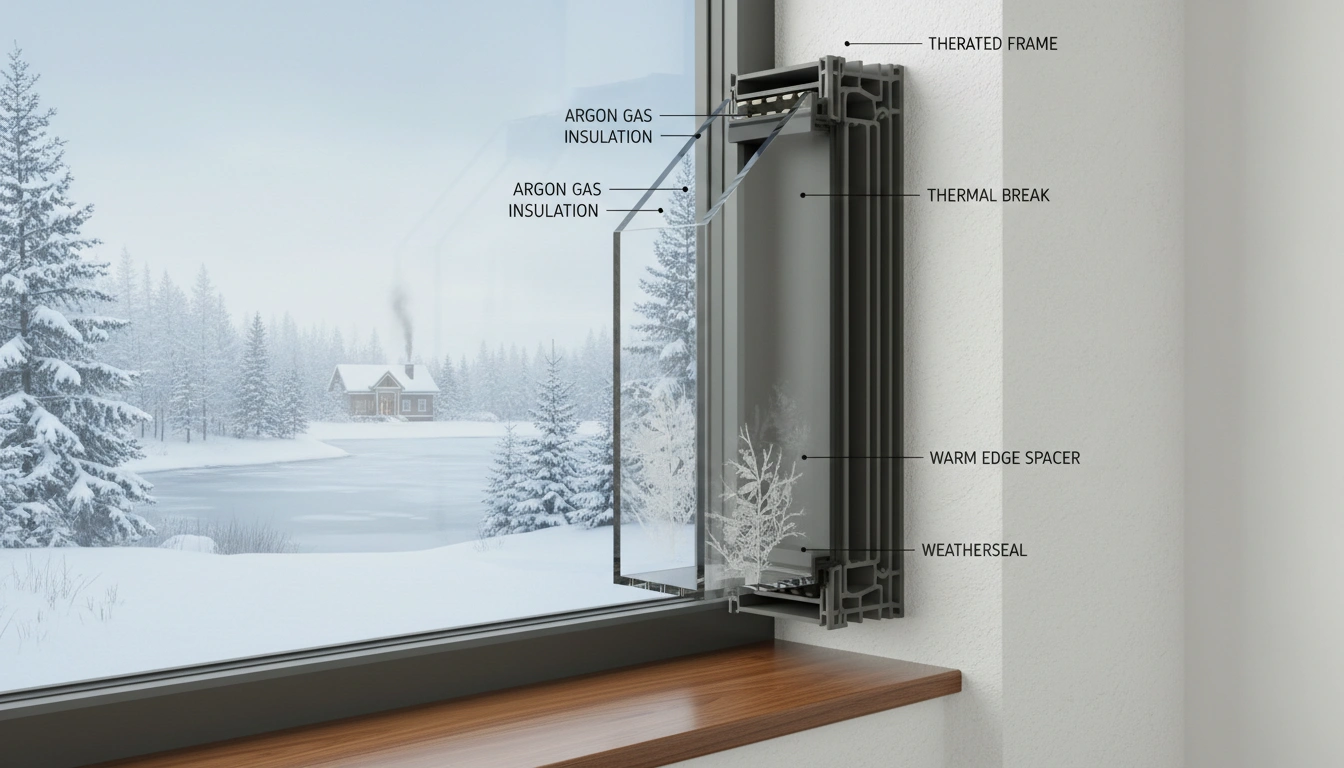
Triple-pane designs stack three glass layers with insulating gaps, often argon-filled, to keep inner surfaces warmer and fog-resistant. In cold snaps, this cuts condensation by 50% over double-pane, as the extra barrier slows heat escape.
- Superior R-values: Thermal resistance around 5+, versus 3 for basic windows.
- Argon gas: Slows conduction by 20–30%, doubling down on dryness.
- Durability: Withstands ice and humidity for 20+ years of performance.
For the full picture, read our explainer on triple pane windows and why Montreal homeowners choose them.
Low-E Coating Windows Explained: Smart Tech for Warmer Panes
Low-E coatings – a thin metallic film – reflect infrared heat inward, warming the glass to above the dew point and slashing fog. They block 85–97% UV without dimming light, ideal for short daylight hours.
- Passive types: Retain winter heat for cold-climate performance.
- Efficiency boost: 20–30% improvement when layered with multi-pane setups.
- Comprehensive control: Pairs with argon for complete moisture management.
Best Time for Window Replacement: Strategic Timing for Montreal
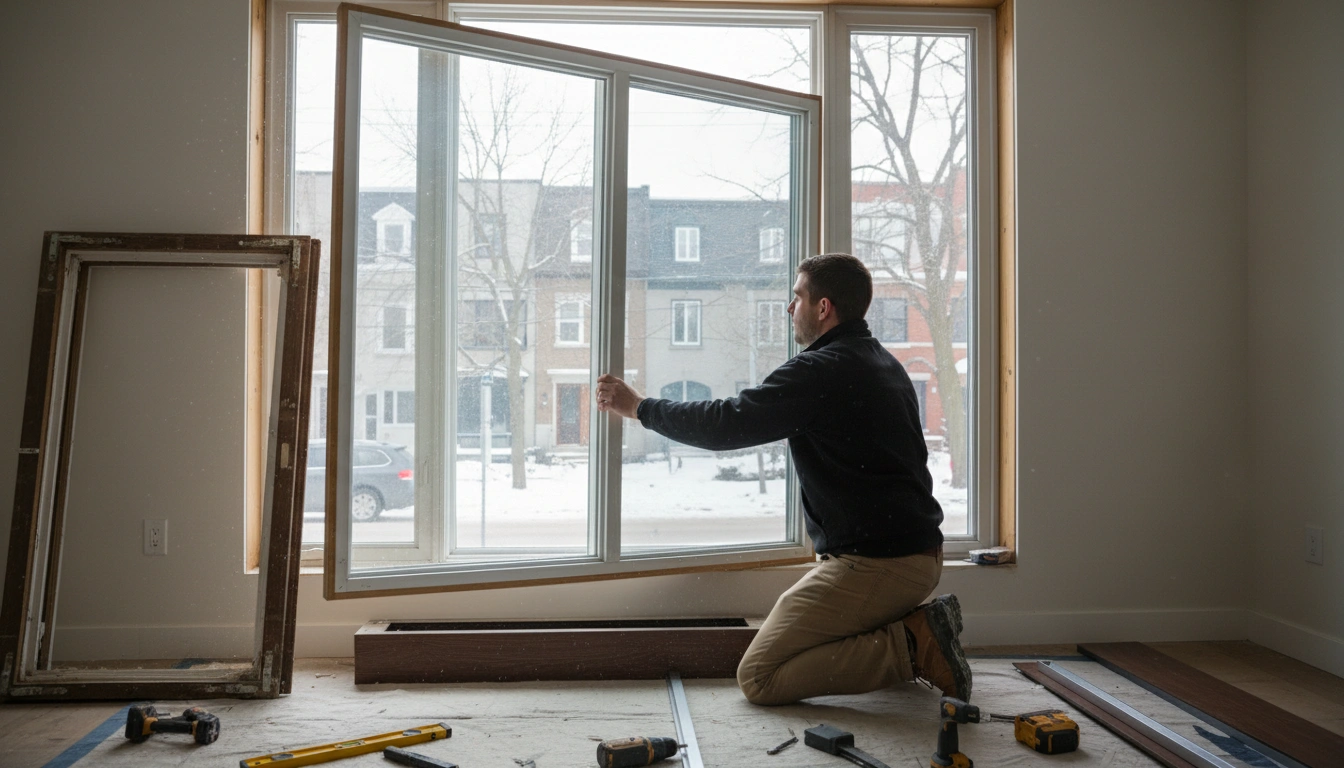
Milder seasons like spring or fall are prime, with temps of 10–20°C allowing quick, disruption-free installs without weather delays. Winter works if professionals use protective measures, but avoid deep freezes to prevent caulk issues.
| Season | Pros | Cons | Ideal For |
|---|---|---|---|
| Spring/Fall | Mild weather, quick drying | Peak demand, longer waits | Most projects |
| Summer | Long days, no freezes | Heat can slow work | Urgent fixes |
| Winter | Deals, immediate efficiency | Cold risks, shorter days | Severe issues |
Everyday Prevention: Habits for a Drier Home
Beyond upgrades, daily tweaks help: run exhaust fans during cooking and showers, use dehumidifiers targeting 30–40% humidity, and ensure vents circulate air properly. Install HRV systems for balanced venting without heat loss. Wipe panes promptly to avoid buildup, and open curtains for airflow during the day.
Frequently Asked Questions
What causes window condensation in Montreal homes?
It is mainly from high indoor humidity meeting cold glass, worsened by leaks or poor insulation in our extreme winters.
How do energy-efficient windows help with condensation?
They keep panes warmer, reducing temperature differences and cutting fog by up to 50%, plus saving 7–12% on bills.
Are triple-pane windows effective against moisture?
Yes – they provide superior insulation, minimizing cold surfaces and condensation risks in Quebec’s climate.
What is the role of Low-E coatings in preventing fog?
They reflect heat inward, warming glass to above the dew point and blocking UV for clearer, drier views.
When is the best time for window replacement to fix condensation?
Spring or fall for mild weather, but address severe issues anytime with professional installation to avoid winter escalation.