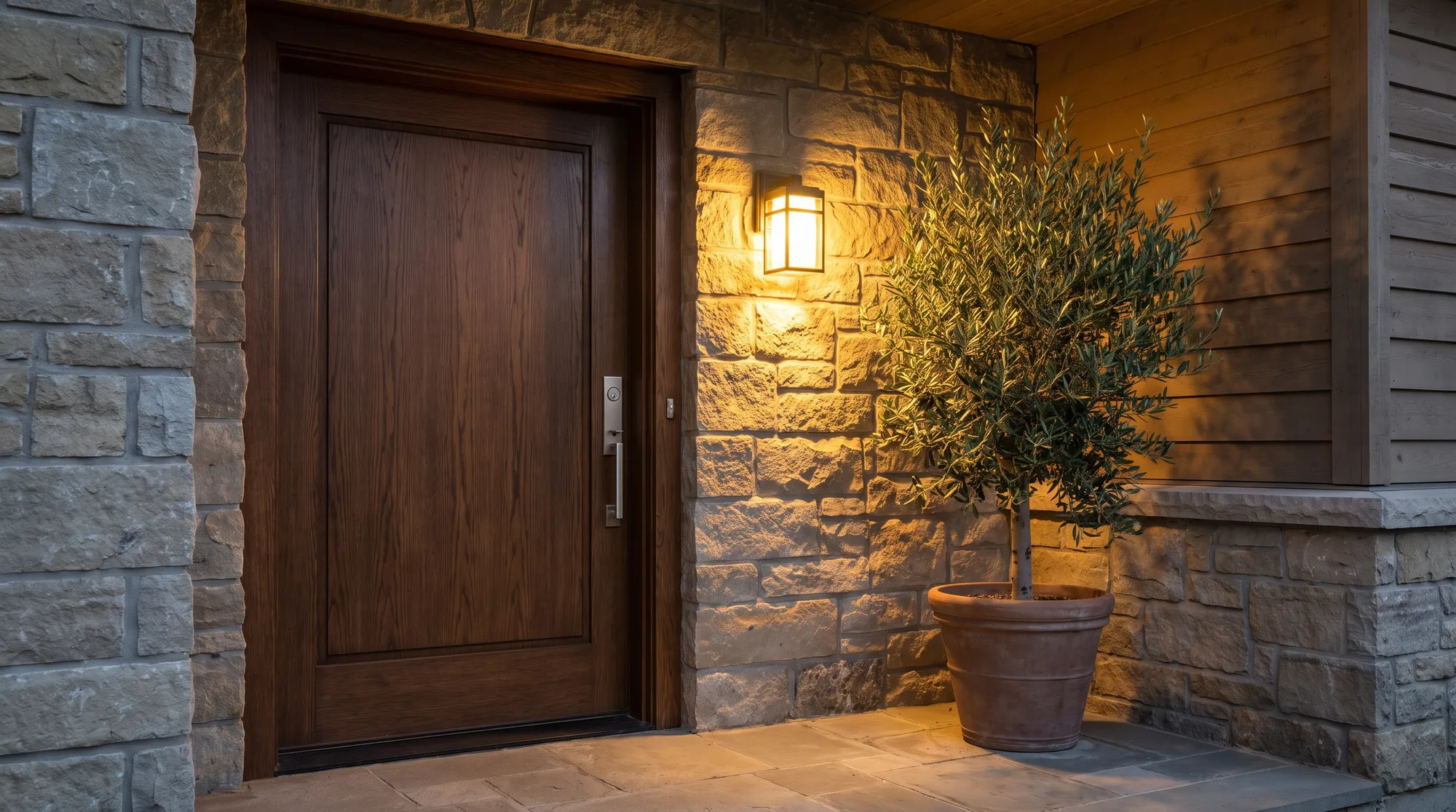
Your insurer never sees your kitchen renovation, but your doors and windows show up in their risk math every single year. Break-ins, water infiltration and wind damage — three of the most common home insurance claims in Quebec — all pass through the building envelope. Here is how quality doors, serious locks and the right glass can lower your premium, strengthen a claim, and prevent the losses that make both go wrong.
Why Insurers Care About Your Doors and Windows
Home insurance pricing is built on claims statistics, and in Quebec the statistics point straight at the envelope. Water damage has been the number one source of home claims in the province for over a decade, representing roughly half of all amounts paid out, and a meaningful share of it enters through failed window seals, rotted door thresholds and poorly flashed openings. Break-ins, the classic theft claim, succeed through doors in the large majority of residential cases — usually by kicking through a weak slab or a short strike plate, not by picking a lock.
Insurers respond to this in two directions. On the pricing side, some offer modest discounts or better terms for documented protective measures: monitored alarms first, but also reinforced entry doors, quality deadbolts and impact-resistant glazing. On the underwriting side, the age and condition of your openings can affect whether certain coverages — notably water damage endorsements — are offered at all, or with what deductible.
None of this means a new front door pays for itself through the premium alone. It means the door is working on three fronts at once: a possible discount today, a lower chance of ever filing a claim, and a cleaner file if you do. The claim you never file is the one that protects your record and your renewal price.
Break-In Resistance: What Actually Stops a Forced Entry
Most forced entries in Quebec are brutally simple: a kick or shoulder against the door until the jamb splits around the strike plate. The weak point is rarely the lock cylinder — it is the half-inch of soft wood the strike screws bite into. A quality exterior door answers this with a reinforced steel or composite frame, a multi-point locking system that anchors the slab at three points along its height, and strike plates fastened with 3-inch screws that reach the wall studs.
Steel and fiberglass slabs with a solid or polyurethane-filled core resist deformation far better than hollow builder-grade doors. A multi-point lock spreads the force of an impact across the top, centre and bottom of the frame, which is why European-style entry systems shrug off attacks that fold a single-deadbolt door in seconds. Ask for the hardware's certification: ANSI/BHMA Grade 1 or 2 deadbolts and tested multi-point gear are the specifications an insurer's questionnaire recognizes.
Glass matters too. Sidelites and door lites within reach of the handle are a classic entry route — smash, reach in, turn the thumbturn. Laminated glass, built like a windshield with a plastic interlayer bonded between two panes, stays in its frame when shattered and turns a five-second entry into a loud, slow struggle most intruders abandon. It is available as an option on door glass, sidelites and ground-floor windows.
- Multi-point locking: 3 anchoring points instead of one deadbolt
- Reinforced strike plates: 3-inch screws into the structural stud
- Solid-core steel or fiberglass slab: resists kicks and prying
- Laminated glass in door lites, sidelites and reachable windows
- ANSI Grade 1-2 hardware: the spec insurers' questionnaires recognize
Water Damage: The Claim Your Windows Can Prevent
Water is where Quebec insurance money actually goes — burst pipes, sewer backup, but also slow infiltration around openings. A window with a failed exterior seal or a door with a worn threshold gasket lets meltwater and wind-driven rain into the wall cavity, where it can rot framing for years before a stain appears inside. By the time it does, insurers often classify it as gradual damage due to lack of maintenance, which most policies exclude entirely.
That exclusion is the key point: infiltration damage frequently is not covered, so prevention is not optional comfort, it is the only protection you have. New windows with welded frames, dual-stage compression seals and proper sloped sill flashing, installed with continuity between the window membrane and the wall's air-vapour barrier, close the route. The same goes for door sills with composite (rot-proof) substrates and adjustable thresholds that maintain compression as the gasket ages.
An annual fall check costs nothing and reads well in a claim file: inspect exterior caulking, confirm weep holes are clear, verify the door sweep still contacts the threshold. If you ever do face a water claim near an opening, being able to show recent, documented maintenance and recent-generation windows shifts the conversation from "gradual neglect" toward "sudden and accidental" — the covered category.
What It Does to Your Premium — Realistic Numbers
Be wary of anyone promising dramatic premium cuts from a door. In Quebec, protective-measure discounts are real but modest: monitored alarm systems commonly earn 5 to 15 percent, while reinforced doors, quality locks and impact glazing typically contribute a few percent or improve your file's overall risk class rather than appearing as a line item. On a typical Quebec premium of $1,000 to $1,600 per year, think tens of dollars annually, not hundreds.
The larger financial effect is indirect. A claim-free record is worth far more than any equipment discount — a single theft or water claim can raise your premium 10 to 25 percent for three to five years and cost you loyalty rebates. Deductibles on water endorsements now commonly run $1,000 to $5,000, so preventing one mid-sized infiltration claim is worth years of hypothetical discounts.
Renovation itself has an insurance consequence people forget: replacing windows and doors increases your home's rebuilding cost, and your dwelling limit should follow. Under-insurance is a quiet risk in older policies. Call your broker after the project — the small premium adjustment for a higher limit is the cheap side of that equation.
Documenting Your Upgrades the Right Way
An upgrade your insurer does not know about earns you nothing, and an upgrade you cannot prove pays a claim slowly. Build a simple file the day of installation: the itemized contract showing models and specifications, the manufacturer's spec sheets (U-factor, glass type, lock certification), photos of each opening inside and out, and the installer's RBQ licence number. Store it in the cloud, not in a drawer that could be in the same flood as the claim.
Send your broker a short email listing the work, the date and the total value, and ask two things explicitly: whether any protective-measure discount applies, and whether your dwelling limit should be adjusted. The email creates a dated record that the insurer was informed — useful if a future claims adjuster questions the condition of your openings.
Keep the warranty documents with the file. If a sealed unit fails or a lock mechanism breaks within the manufacturer's warranty period, that is the manufacturer's cost, not a claim — and knowing the boundary keeps small problems off your insurance record entirely.
When You Do File a Claim: How Quality Openings Help
After a break-in attempt, the difference between a $400 repair and a $4,000 replacement often comes down to what the door was made of. A steel multi-point door that repelled a kick may need a cosmetic panel repair and a strike adjustment; a builder-grade door that failed means a new door, frame, casing, possible interior damage and stolen property on top. The better door shrinks both the loss and the deductible pain.
Documentation changes settlement speed and value. Adjusters settle on replacement cost for like kind and quality — if you can show your door was a fiberglass multi-point model worth $3,500 installed, that is what gets priced, rather than the $900 commodity slab the estimator defaults to. Photos and invoices from your upgrade file do that work.
For wind and storm events, glazing quality matters in a subtler way: laminated or tempered glass that stays intact keeps a broken-branch impact as a glass claim instead of a glass-plus-water-plus-contents claim. Insurers price the whole chain of consequences; so should you.
Seven Questions to Ask Your Insurer Before and After Upgrading
Five minutes with your broker before you sign a window or door contract can steer the specification toward whatever their underwriting actually rewards. Every insurer weighs measures differently, and some have specific certification requirements for a discount to apply — asking after installation is too late to adjust.
Bring the quote with you and go down this list. The answers also tell you a great deal about your current coverage's blind spots, particularly around water infiltration and sewer backup, which are endorsements rather than base coverage in most Quebec policies.
- Do you offer a discount for reinforced doors, multi-point locks or laminated glass — and what proof do you require?
- Does my policy cover water infiltration around windows and doors, or only sudden pipe failures?
- What is my current deductible for water damage, and can quality upgrades reduce it?
- Should my dwelling rebuilding limit change after this renovation?
- Are claims affected if work is done by a contractor without an RBQ licence?
- Is glass breakage covered as a standalone item, and with what deductible?
- How would a break-in claim be settled — replacement cost or depreciated value — for a premium door?
The Bottom Line for Quebec Homeowners
Quality doors and windows are not primarily an insurance play — they are a comfort, energy and security investment that happens to make you a better risk. Priced honestly: expect modest direct discounts, meaningful claim prevention, faster and fuller settlements when something does happen, and protection of the claim-free record that drives your renewal price for years.
If you are planning an entry door or window project, choose the security options while the opening is already being rebuilt — multi-point hardware, laminated sidelites and a composite-sill exterior door cost far less as factory options than as retrofits. Then spend the five minutes with your broker, send the documentation email, and let the upgrade work on all three fronts at once.
Frequently Asked Questions
Will new windows and doors lower my home insurance premium in Quebec?
Modestly, in some cases. Direct discounts for reinforced doors, quality locks or impact glazing typically amount to a few percent, far less than a monitored alarm's 5 to 15 percent. The bigger financial win is preventing claims that would raise your premium 10 to 25 percent for years.
Is water infiltration around windows covered by insurance?
Often not. Most Quebec policies exclude gradual infiltration and damage attributed to lack of maintenance; coverage usually applies to sudden, accidental events. That is exactly why sound seals, flashing and thresholds matter — prevention is frequently the only protection you have for this risk.
Does laminated glass really deter break-ins?
Yes. Laminated glass holds together on a plastic interlayer when shattered, so smashing a sidelite to reach the lock becomes a slow, noisy job rather than a five-second entry. Combined with a multi-point lock, it removes the two easiest attacks on a residential entry.
What proof does an insurer need for a security upgrade discount?
Typically the invoice showing the models installed, manufacturer spec sheets identifying the lock grade or glass type, and sometimes photos. Send them to your broker by email with the installation date so the notification itself is documented — requirements vary by insurer, so ask before the project.
Should I tell my insurer after replacing windows and doors?
Yes, always. The renovation raises your home's rebuilding cost, so your dwelling limit may need adjusting, and any available discount only applies once the insurer is informed. A short email with the contract value, date and specifications covers both in one step.
Does using an RBQ-licensed contractor matter for insurance?
It can matter a great deal. Work done without proper licensing can complicate liability and claim scenarios, and the contractor's own insurance and licence bond protect you during installation. Insurers' questionnaires and adjusters both treat RBQ-licensed, documented work as the professional standard.