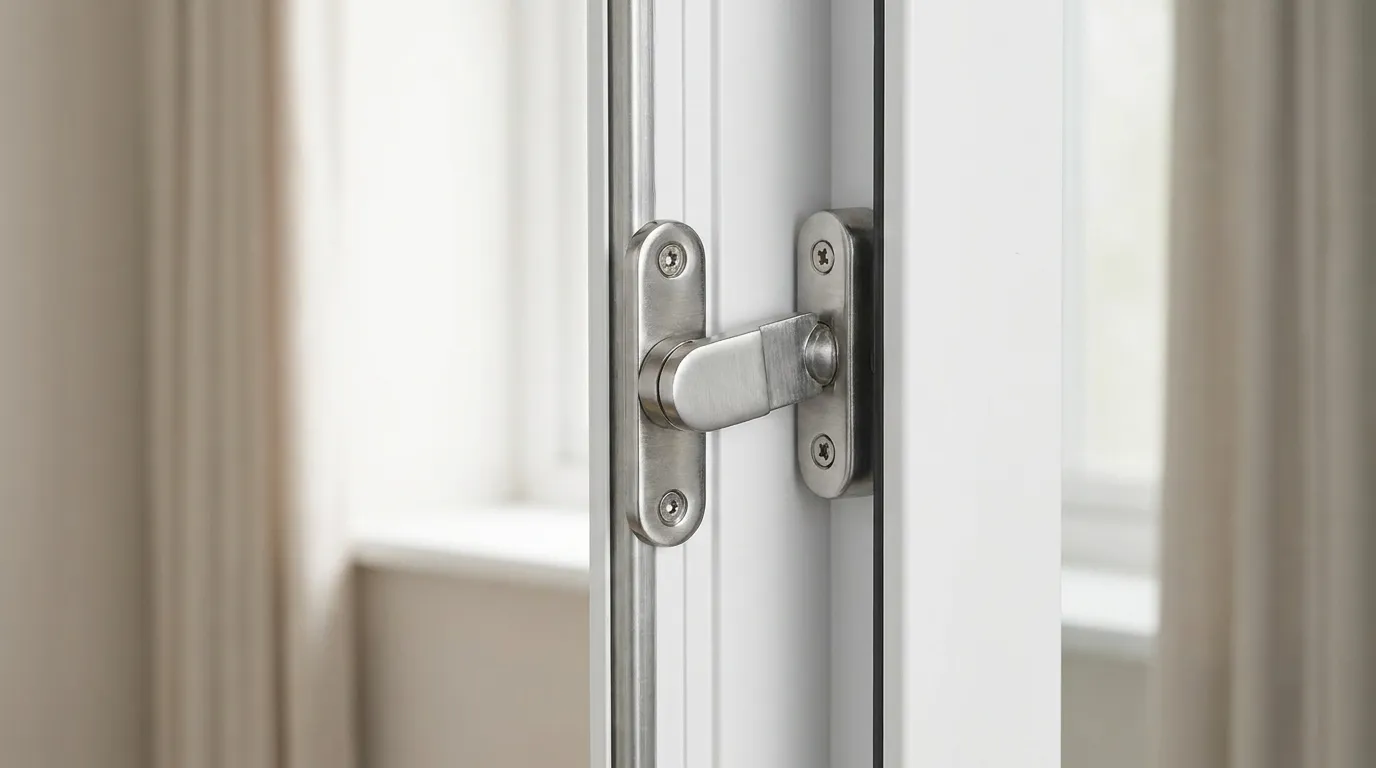
Doors get the deadbolts and the attention, but a determined intruder often prefers the window — especially a ground-floor one left ajar on a warm July night. Modern windows can be genuinely hard targets, combining multi-point locks, laminated glass and reinforced frames without looking like a fortress. Here is what actually protects, what is mostly marketing, and the summer habits that matter as much as the hardware.
Why Windows Are the Weak Point Worth Fixing
Most residential break-ins happen through the easiest opening, and after unlocked doors, ground-floor windows and patio doors top the list. Intruders overwhelmingly favour speed and silence: a window that resists prying for more than a minute or so, or that cannot be forced without loud breaking glass, sends them elsewhere. Security, in practice, is about buying time and noise, not achieving invulnerability.
Summer raises the stakes in Quebec. The same heat wave that has you sleeping with windows open is peak season for opportunistic entries, and vacation weeks leave homes predictably empty. The good news is that window security stacks: decent locks plus tougher glass plus smart habits multiply each other, and most of it comes standard on quality windows rather than as exotic add-ons.
Locking Hardware: Cam Locks, Multi-Point and Sash Locks
On casement and awning windows — the crank-operated styles that dominate Quebec homes — the workhorse is the cam lock, a lever that pulls a hook-shaped keeper tight against the frame. One cam lock secures a small window; taller units should have two or more, or better, a multi-point system where a single handle drives locking points along the full height of the sash. Multi-point locking spreads any prying force across several steel engagement points, which is exactly what defeats the crowbar-in-the-corner attack.
Hung and sliding windows use sash locks where the two panels meet, and their weakness is usually slop: a worn sash lock that looks latched can pop under a firm upward jolt. Quality hardware engages deeply, resists being jimmied with a blade slipped between sashes, and can be supplemented with inexpensive vent stops or pin locks that physically block the panel from travelling. Whatever the style, hardware only works when the window is fully closed — a window on its night latch is convenience, not security.
A quiet advantage of casement windows deserves mention: when closed and locked, the sash presses into the frame from inside and presents no exterior track or gap to attack. Combined with multi-point locks, a modern casement is among the most break-in-resistant window formats available to homeowners.
- Cam locks: the standard on casements — insist on two or more on taller sashes.
- Multi-point locking: one handle, several steel locking points along the frame.
- Sash locks with deep engagement: essential on hung and sliding windows.
- Vent stops and pin locks: cheap add-ons that block sliders and hung windows from opening far enough to enter.
- Keyed interior locks: useful mainly where glass could be broken to reach the latch.
Glass That Fights Back: Laminated and Tempered
Standard double glazing slows no one who is willing to break it, so the glass itself is the next layer. Laminated glass — two panes bonded to a tough plastic interlayer, the same construction as a car windshield — is the security workhorse. Struck hard, it cracks but hangs together in the frame, forcing an intruder to batter a hole through a flexible, noisy membrane rather than clearing shards with one blow. That process is slow, loud and rarely worth it.
Tempered glass, by contrast, is a safety product rather than a security one: it is several times stronger than ordinary glass, but when it does break, it disintegrates instantly into small granules. It protects your family from injury and is code-required near doors and floor-level glazing, but it opens quickly once broken. In a sealed unit you can combine the two — tempered outboard, laminated inboard — and laminated glass brings bonus benefits in noise reduction and near-total UV blocking. Aftermarket security films add some of the same tear resistance to existing windows, though their performance depends heavily on professional edge-anchored installation.
Frames, Reinforcement and the Installation Nobody Sees
The strongest lock is only as strong as the frame it bites into. Quality windows use reinforced meeting rails and steel or composite inserts inside vinyl profiles at hardware points, so screws anchor into something more serious than hollow PVC. Hybrid aluminum-clad frames add rigidity that resists spreading — the technique of jacking the frame apart until a latch simply falls out of its keeper.
Installation is the invisible half of security. A window fastened with a few short screws into shims can sometimes be levered out as a unit, lock and all, while a properly anchored frame transfers any attack into the wall structure itself. This is one more reason to use an RBQ-licensed installer and to ask specifically how frames are anchored. While you are at it, remember that hardware ages: a cam lock that no longer pulls the sash tight, or a latch drifting out of alignment after the house settles, gives up much of its protection and usually costs little to adjust or replace.
Ground Floors, Basements and Patio Doors
Prioritize spending where intruders actually work: ground-floor windows hidden from the street, basement windows behind shrubs, and the patio door. For sliding patio doors, the classic attacks are forcing the latch, lifting the panel out of its track, and simply exploiting an unlocked door. The counters are mechanical and cheap: a multi-point or hook-style latch, anti-lift blocks or screws in the upper track so the panel cannot be raised, and a security bar or rod in the lower track as a visible second lock.
Basement and side-alley windows benefit most from laminated glass, since they offer privacy and time to work unobserved. Landscaping is part of the system too — thorny shrubs under vulnerable windows, motion-sensor lighting on dark walls, and sightlines that deny cover all lower your home's ranking on an opportunist's list. None of it costs much compared with what it protects.
- Patio door: hook-style multi-point latch, anti-lift hardware, security bar in the track.
- Basement windows: laminated glass and, where appropriate, interior-release security grilles.
- Hidden ground-floor windows: upgraded locks first, laminated glass next, lighting always.
- Garage and shed windows: frost or film the glass — hiding the contents removes the motive.
Summer Habits: Fresh Air Without an Open Invitation
Hardware cannot compensate for an unlocked, wide-open window at 2 a.m. In heat waves, use ventilation strategically: favour upper-floor windows for overnight air, and equip accessible windows with vent stops that let them open a hand's width but no further against force. Casements with multi-point hardware can lock in a slightly-open position on some models — ask, because it is one of the most useful comfort-security features in a Quebec summer.
Layer in awareness for the times you are away. Simple contact sensors and glass-break detectors tie windows into any alarm system for a few dollars per opening, and timers or smart lighting remove the darkened-house signal during vacation weeks. The routine matters more than the technology: a nightly thirty-second walk-through that closes and locks every accessible window will do more for you than any single piece of hardware you can buy.
What It Means for Insurance and Home Value
Home insurers in Quebec price risk, and demonstrated security influences it. Many offer premium discounts for monitored alarm systems, and after a claim, evidence of forced entry through a locked, secured opening keeps the process straightforward. Photograph your windows, locks and any laminated-glass invoices as part of your home inventory; documentation costs nothing and pays when it matters.
When windows are due for replacement anyway, security is one of the cheapest upgrades to bundle in — multi-point hardware and laminated glass add a modest percentage to a project you are already doing, far less than retrofitting either later. If you are weighing that project, browse our windows collection and ask about security packages by opening type. A window that keeps out -30°C in January and an intruder in July is simply doing its whole job.
Frequently Asked Questions
What is the most secure type of window?
A modern casement window with multi-point locking is generally the hardest residential target: the locked sash presses into the frame from inside, offers no exterior track to attack, and spreads prying force across several steel points. Add laminated glass and a properly anchored frame and you have a genuinely difficult entry.
Is laminated glass worth the extra cost?
For ground-floor, basement and patio-door glazing, usually yes. It holds together when struck, turning a one-blow entry into a slow, loud struggle, and it also cuts outside noise and blocks nearly all UV fading. Upstairs windows rarely justify it, so spend where the risk actually is.
Can I leave windows open at night safely in summer?
Prefer upper floors for overnight ventilation, and fit accessible windows with vent stops or locking limiters so they cannot be pushed open wider from outside. Some casement models lock in a slightly-open position, which is ideal. A fully open, unattended ground-floor window is never secure, whatever hardware it carries.
Do window bars make sense for basements?
They are effective but come with a serious caveat: any grille on a bedroom window must have an interior quick-release, because basement windows are emergency exits. Many homeowners get equivalent protection with less visual and safety cost from laminated glass plus pin locks and lighting.
Will better window security lower my insurance premium?
Discounts in Quebec are most commonly tied to monitored alarm systems, which window contact and glass-break sensors feed into, rather than to hardware alone. Better locks and glass still pay off by preventing loss and simplifying claims. Ask your insurer what qualifies before you buy, and keep invoices for everything.
My windows are fine but old — can I improve security without replacing them?
Yes: replace worn cam or sash locks, add vent stops and pin locks, install a patio-door security bar and anti-lift screws, and consider professionally installed security film on vulnerable glass. Together these cost a few hundred dollars. Full replacement makes sense when the windows are failing anyway — then multi-point hardware and laminated glass come almost free of compromise.