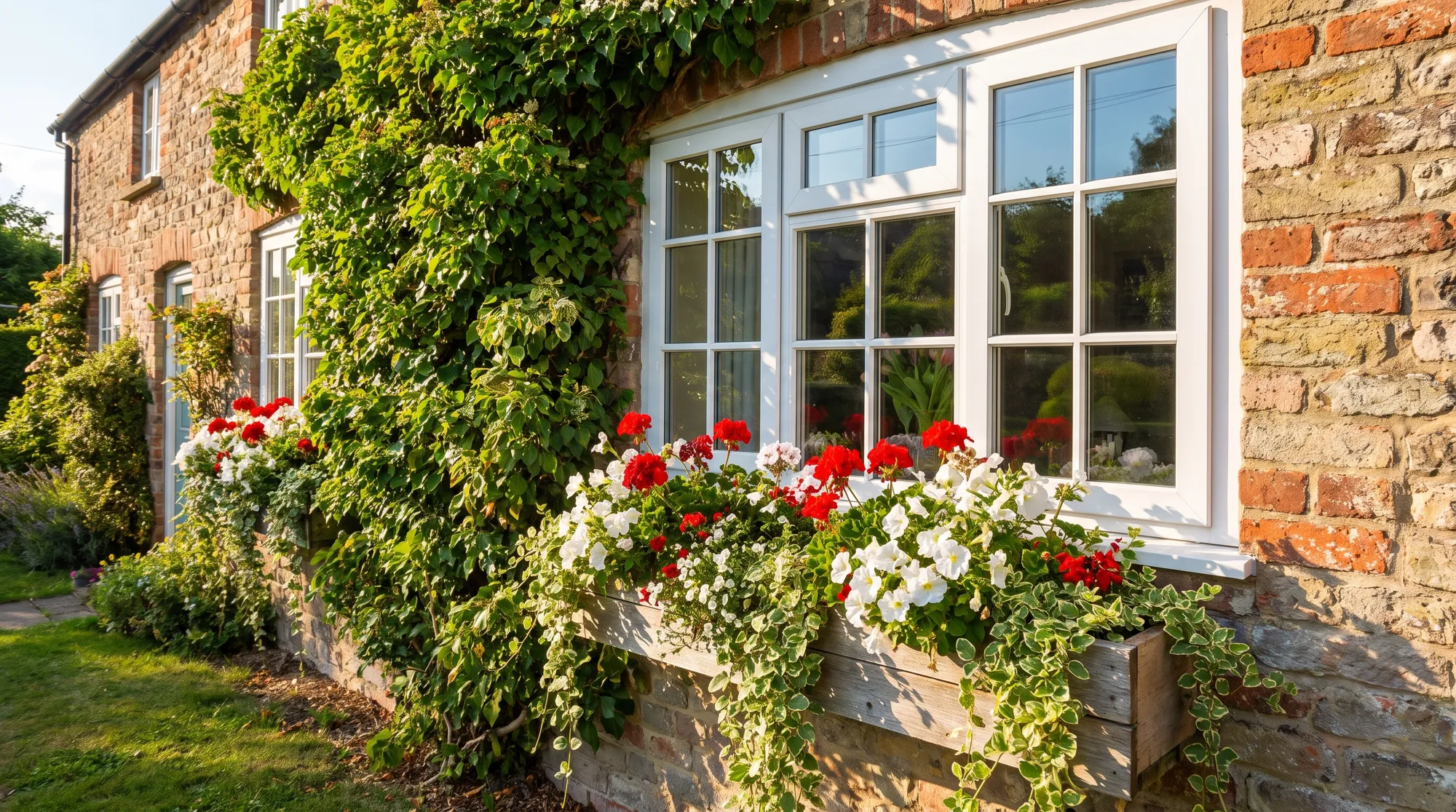
Few upgrades deliver as much curb appeal per dollar as window flower boxes — a burst of colour framing every window for a few hundred dollars. But a box mounted wrong can rot cladding, stain brick, void a window warranty and funnel water straight at your sills. Here is how to get the charm without the damage, from bracket choice to the plants that actually survive a Quebec summer.
Why Window Boxes Punch Above Their Weight
Real-estate agents talk about curb appeal in thousands of dollars; window boxes deliver it for the price of a nice dinner. A coordinated set of planted boxes draws the eye to the windows — the feature that most defines a facade — and signals a maintained home from the sidewalk. In Montreal neighbourhoods like Rosemont or Villeray, where duplex facades sit metres from the street, boxes are often the single most visible landscaping a homeowner has.
They also work with Quebec's calendar rather than against it. From mid-May (after the last frost, typically around May 15 in the Montreal area) to October, boxes carry the show; in winter you can fill them with spruce tips, red dogwood branches and cedar boughs, so the facade never looks abandoned. That two-season strategy is exactly what garden centres across the province design for.
The catch is that a window box is, structurally speaking, a 30-to-70 kg wet weight hanging off your wall, inches from your window frame, dripping water all season. Done casually, it is a slow-motion attack on your cladding and sills. Done properly, it touches neither. The difference is entirely in the mounting and the drainage.
Mounting Without Damaging Frames or Cladding
The first rule is absolute: never screw anything into the window frame itself — not vinyl, not aluminum cladding, not the PVC brickmould. Piercing the frame breaks the pressure-equalized rain screen the window depends on, invites water into the wall assembly, and voids most manufacturer warranties on the spot. All mounting hardware belongs on the wall below the window, anchored into structure, never into the window unit.
What you anchor into depends on your cladding. On wood or fibre-cement siding, lag screws must land in the studs or in solid blocking, not just the siding — a stud finder and 6 mm pilot holes are your friends. On brick veneer, drill into the brick units themselves (not the mortar joints, which crumble under cyclic loads) with sleeve anchors or use proper masonry brackets. On vinyl siding, never compress the siding: use standoff spacers so the bracket bears through the siding onto the sheathing and stud behind, leaving the vinyl free to expand and contract.
Every hole you drill is a future leak unless you seal it. Inject a quality exterior polyurethane or hybrid sealant into each pilot hole before driving the fastener, so the screw threads bed in sealant rather than leaving an open channel. In freeze-thaw country this matters double: water that enters a hole in October will freeze and jack it wider by March. Stainless or hot-dipped galvanized fasteners only — plain steel streaks rust down a facade within two seasons.
If drilling is off the table entirely — rental units, condo bylaws, or a facade you simply refuse to pierce — you still have options. Hook-style hangers that ride over the sill on low-profile brackets work for lightweight boxes, and freestanding window-height planter stands deliver the same visual effect from the ground. Railing-mounted boxes on a balcony or gallery railing, common on Montreal walk-ups, avoid the wall question altogether.
Drainage: Keep Water Off Your Sills
Water management is where most window-box installations quietly fail. A planted box sheds water every time it rains or you water it, and that water has to go somewhere. If the box sits tight against the wall or directly over the sill, the runoff wicks along the cladding, stains brick with fertilizer salts, and keeps the sill and the joint below the window wet for days at a time — precisely the conditions that rot wood components and degrade sealant joints.
The fix is geometry. Mount the box so its back face stands 4 to 8 cm off the wall — brackets do this naturally — so air circulates behind it and drips fall clear of the cladding. Position the box a few centimetres below the sill, never resting on it: sills are sloped to shed water and are not designed to carry point loads. And make sure drainage holes are drilled in the box bottom's front half, so water drips away from the building line rather than back toward the foundation of the wall.
Use a plastic liner inside decorative wood or metal boxes. The liner keeps constantly damp soil away from the box structure, extends the box's life dramatically, and lets you lift the whole planting out for maintenance or seasonal swaps. Put a layer of landscape fabric over the liner's drainage holes so soil stays in and only water leaves — soil slurry dripping down a facade is what causes the tell-tale dirty streaks under badly done boxes.
Finally, water in the morning, and water the soil rather than showering the whole box. Morning watering means the box and the wall zone behind it dry during the day instead of sitting saturated overnight — a small habit that meaningfully reduces the moisture load on your facade over a 150-day growing season.
Weight: The Number Everyone Underestimates
A 1.2 m window box holds roughly 40 to 60 litres of soil. Dry potting mix is light, but saturated soil weighs about 1.5 times its dry weight — after a July thunderstorm, that innocent-looking box can weigh 50 to 70 kg with the box, liner, plants and water included. Every bracket, fastener and anchor has to carry that, cycled through wind gusts and, if you leave boxes up year-round, snow loading on top.
Buy or build for the wet weight, not the dry one. Quality steel brackets are rated 30 to 50 kg per pair; use three brackets on any box over 90 cm, and check that the rating refers to the pair, not each. Fasteners into wood studs should be 8 mm lag screws with at least 40 mm of thread in the stud; masonry anchors should be rated with a safety factor of at least 3 over your calculated load, because cyclic wind loading is far harsher than a static test.
You can also engineer the weight down. Modern peat- or coir-based container mixes weigh a third of garden soil; filling the bottom quarter of a deep box with upturned nursery pots or chunks of closed-cell foam cuts volume without hurting the plants, whose roots rarely use the full depth anyway. Lighter boxes are kinder to your wall, your brackets and your back at planting time.
Plants That Actually Thrive in Quebec Boxes
A window box is a harsh habitat: shallow soil that heats up, dries out fast, and swings in temperature far more than a garden bed. In Quebec (hardiness zones 4 to 5 for most of the settled province) the winning box plants are the ones bred for containers and indifferent to a missed watering. The classic recipe — a thriller, some fillers, and spillers over the edge — still works because it layers heights the way a facade wants.
Match the plants to the orientation of the wall. South- and west-facing boxes bake: geraniums (pelargoniums), calibrachoa, lantana, dracaena spikes and trailing dichondra shrug off the heat. North-facing boxes get gentle light: begonias, fuchsias, coleus, impatiens and trailing ivy stay lush where sun-lovers would sulk. East-facing boxes with morning sun are the easiest of all and take nearly anything.
Do not overlook the edible and the perennial options. Compact herbs — thyme, chives, parsley, trailing rosemary — make a kitchen-window box that earns its keep, and small ornamental grasses add movement. Come late September, pull the summer annuals and build the winter arrangement: spruce tips, red-osier dogwood stems, birch branches and cedar sprigs stuck into the (soon frozen) soil hold their look until April with zero watering.
- Full sun (south/west): geraniums, calibrachoa, lantana, dracaena, dichondra 'Silver Falls'
- Shade (north): begonias, fuchsias, coleus, impatiens, trailing ivy
- Morning sun (east): petunias, osteospermum, herbs, nearly anything
- Winter arrangements: spruce tips, red dogwood branches, birch, cedar boughs
- Skip: deep-rooted vegetables, large shrubs, anything needing staking above 60 cm
Plan for Maintenance — and for Your Windows
A window box you cannot reach becomes an eyesore by August. Ground-floor boxes are trivial; second-storey boxes should be planted in a removable liner you can lift out and carry down, or positioned so you can water and deadhead from inside through the open window. Self-watering liners with a reservoir stretch the interval between waterings from daily to twice a week in July heat — worth every dollar on upper floors.
Think about how your windows operate before you fix the box height. A casement window cranks outward and will hit tall plantings if the box sits high and close; keep the box lower or the plants compact on casement facades. Sliders and single-hung windows pass over the box harmlessly. Make sure you can still reach the exterior glass for cleaning — a box that blocks washing the window it decorates has missed its own point.
Boxes also concentrate humidity, soil and insects centimetres from your window's weakest points. Once a season, look behind the box: check that the cladding is dry, the sealant joint under the sill is intact, and no soil has splashed into the weep holes of the window above. Five minutes of inspection in June and September keeps a decorative feature from becoming a building-envelope problem.
If your sills are already soft, your brickmould flaking, or your windows fogging between panes, fix the window before decorating it — a flower box on a failing window is lipstick on a leak. Explore our windows, built in Saint-Laurent for Quebec facades, and add the boxes to a wall assembly that is sound underneath.
Frequently Asked Questions
Can I attach a flower box directly to my window frame?
No — never screw into the window frame, cladding or brickmould. Piercing the frame lets water into the assembly and typically voids the manufacturer's warranty. Mount brackets on the wall below the window, anchored into studs or brick, with every hole sealed with exterior-grade sealant.
How heavy is a window flower box when watered?
A 1.2 m box with saturated soil, plants and liner weighs 50 to 70 kg — roughly 1.5 times its dry weight. Choose brackets rated for the wet weight with a healthy margin, use three brackets on boxes over 90 cm, and anchor into structure, not just siding.
How do I stop my window box from staining the wall?
Stand the box 4 to 8 cm off the wall on brackets so drips fall clear, drill drainage holes toward the front of the box bottom, and line it with landscape fabric so soil stays put. Water the soil directly in the morning rather than showering the whole arrangement.
What are the best flowers for window boxes in Quebec?
For hot south or west walls: geraniums, calibrachoa and lantana. For shaded north walls: begonias, fuchsias and coleus. Most of settled Quebec is hardiness zone 4 to 5, so treat box plantings as annuals, planting after the last frost in mid-May.
Can I leave my window boxes up over winter?
Yes, if the brackets are anchored into structure and rated for snow on top of wet soil. Empty summer annuals in late September and replace them with spruce tips, dogwood branches and cedar for a winter arrangement — or lift out the liner and store it, leaving the box as a clean architectural element.
Will a window box interfere with opening my windows?
It can with casement windows, which crank outward over the box — keep the box lower or plant compact varieties there. Sliders and hung windows are unaffected. Always confirm you can still reach the glass for cleaning and the area behind the box for a seasonal inspection.