It is one of the most common questions we hear from Quebec homeowners: is triple glazing actually worth the extra cost, or is double pane good enough? The honest answer is that it depends on your home, your comfort priorities, and where you live. Here is what the numbers and the physics really say for our cold climate.
What Double and Triple Glazing Actually Are
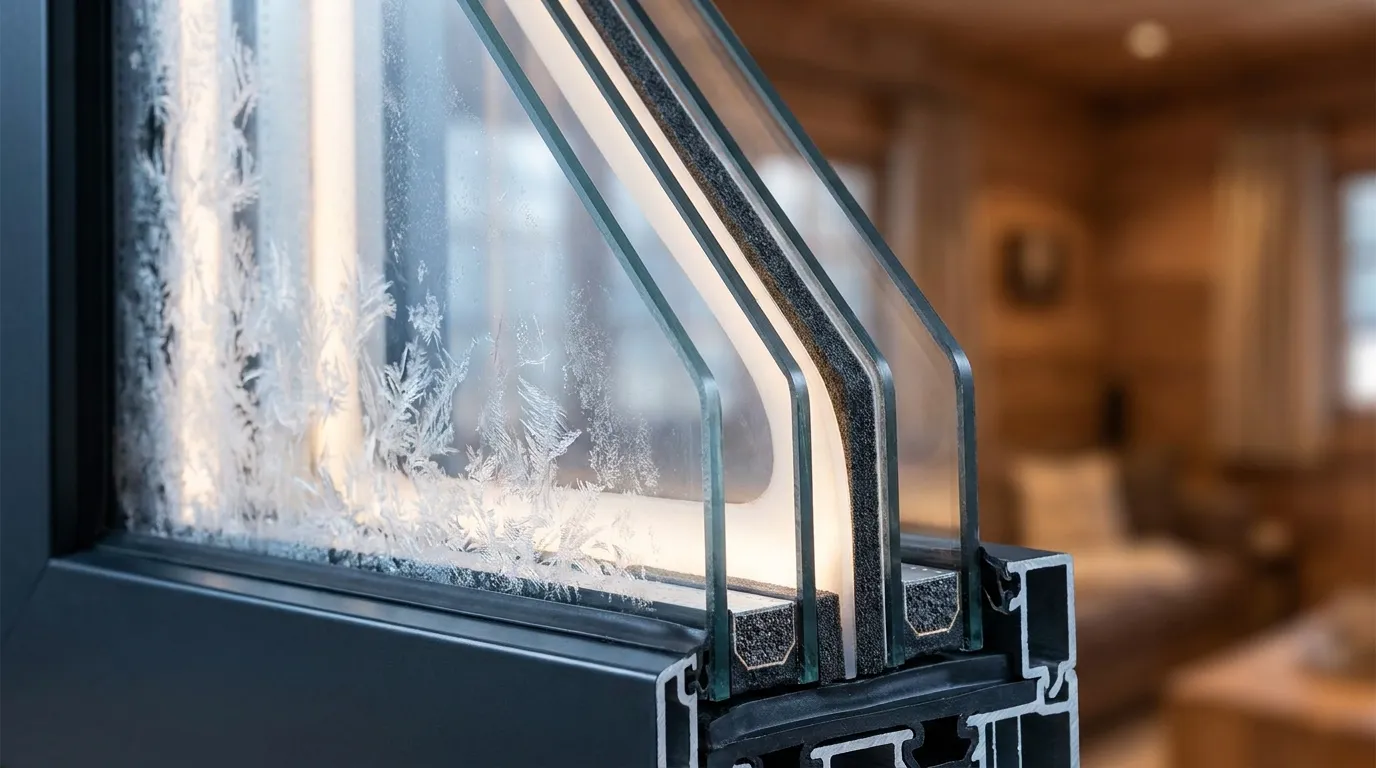
A sealed glazing unit is not just glass; it is a system. Double glazing means two panes of glass separated by a spacer and a sealed cavity filled with an inert gas, usually argon. Triple glazing adds a third pane and a second gas-filled cavity, creating two insulating air spaces instead of one.
The insulating power comes mostly from those gas-filled gaps and the low-emissivity (low-E) coatings applied to the glass surfaces. Low-E coatings reflect heat back into the room in winter while still letting light through. A triple unit typically carries multiple low-E coatings and more total insulating cavity, which is why it performs better thermally.
The trade-offs are weight, thickness, and cost. A triple unit is heavier and thicker, which requires a frame designed to carry it, and it costs more to manufacture. That is the core of the decision: how much extra performance do you get, and is it worth the premium in Quebec specifically?
U-Factor and R-Value: The Numbers That Matter
Window performance is measured by U-factor, the rate of heat loss. Lower U-factor means better insulation. It is the inverse of R-value, which you may know from insulation: higher R-value means better insulation. A window's U-factor captures the whole assembly, glass and frame together.
A quality double-glazed window with argon and low-E typically lands around a U-factor of 1.4 to 1.6 W/m²K (roughly R-4 to R-5 for the glass). A well-built triple-glazed unit can reach U-factors of 0.8 to 1.0 W/m²K (roughly R-6 to R-8 for the glass). That is a meaningful jump, often a 30 to 40 percent reduction in heat loss through the glass.
For ENERGY STAR certification in Canada's Zone D, the coldest tier where most of Quebec sits, the performance requirements are strict. Many double-glazed windows can meet Zone D with the right coatings and gas fill, but triple glazing clears the bar with room to spare and pushes toward the high-performance and Passive House range.
- U-factor: lower is better (rate of heat loss)
- R-value: higher is better (resistance to heat flow), the inverse of U-factor
- Typical double glazing: U-factor ~1.4–1.6, glass ~R-4 to R-5
- Typical triple glazing: U-factor ~0.8–1.0, glass ~R-6 to R-8
Comfort Near the Glass at -30°C
Numbers on a spec sheet do not capture the single biggest reason Quebec homeowners upgrade to triple glazing: comfort. On a -30°C Montreal night, the interior surface of a window matters enormously. With double glazing, the inner pane can drop to around 9 to 11°C, cool enough that you feel a chill and a draft-like effect when sitting nearby, even though no air is actually leaking.
With triple glazing, that inner surface stays noticeably warmer, often 15 to 17°C, because the extra pane and cavity keep the cold from reaching it. The result is that you can put a sofa, a reading chair, or a bed right against a window wall and stay comfortable, using the full floor area of the room rather than avoiding the perimeter all winter.
This radiant-comfort effect is subtle on paper but obvious in daily life. If your home has large windows, a lot of glass area, or rooms you actively use next to windows, triple glazing transforms how those spaces feel during our coldest months.
Condensation and Noise
Warmer interior glass also means less condensation. Condensation forms when humid indoor air hits a cold surface, and the colder the inner pane, the more likely you are to see fog, frost, or water pooling on the sill during a cold snap. Because triple glazing keeps that inner surface warmer, it tolerates higher indoor humidity before condensation appears, which is a real benefit in tightly sealed modern homes.
Noise is the other perk people notice. The extra pane and asymmetric cavity depths of a triple unit dampen sound transmission better than double glazing. If you live near a busy street, a highway, a rail line, or under a flight path, triple glazing can make a genuine difference in the quiet of your home, though the frame and installation quality matter just as much as the glass here.
Neither of these is the primary reason to choose triple, but together with comfort and energy savings, they tip the value equation for many households, particularly those sensitive to noise or managing indoor humidity.
The Cost Premium and Payback
Triple glazing typically adds roughly 10 to 15 percent to the price of a window compared to a double-glazed equivalent of the same quality. On a whole-home window replacement, that premium adds up, so it is fair to ask what you get back.
The pure energy payback through reduced heating bills is real but gradual. In Quebec's cold Zone D, with our long heating season, the extra insulation saves more energy than it would in a milder province, which shortens the payback compared to elsewhere in Canada. Available incentives help too: Rénoclimat can return up to $150 per rough opening, and the Canada Greener Homes initiative has offered up to $5,000 for qualifying retrofits, effectively subsidizing the upgrade to higher-performance windows.
The catch is that energy savings alone rarely justify triple glazing on strict financial grounds within a short horizon. The stronger case combines energy savings with comfort, reduced condensation, quieter rooms, and higher resale appeal, benefits you enjoy every single winter day, not just on a utility statement.
When Triple Glazing Is Worth It, and When It Is Not
Triple glazing makes the most sense in a few clear situations. If you are building new or doing a deep retrofit, the incremental cost is small relative to the whole project and you lock in decades of comfort. If you have large windows, high glass-to-wall ratios, or rooms you use right next to the glass, the comfort gain is substantial. And if you are chasing high-performance or Passive House targets, triple glazing is effectively required.
It makes less sense in specific cases. For a small window in a rarely-used space, a garage, a utility room, the comfort upside is marginal and the premium harder to justify. If your budget is tight and forces a choice, a quality double-glazed ENERGY STAR Zone D window with good installation will vastly outperform an old single or leaky double unit, and that upgrade delivers most of the benefit for less money.
There is also a structural consideration: triple units are heavy, and they belong in frames engineered to carry and seal them properly. A triple unit in a weak frame or a poor installation squanders its advantage. This is where product quality and RBQ-licensed installation matter as much as the glazing choice itself.
- Strong case: new build, deep retrofit, large or numerous windows, rooms used near glass, Passive House goals
- Weaker case: small windows, rarely-used or unheated spaces, very tight budgets
- Either way: a warm frame and proper installation are essential to realize the benefit
The Quebec Verdict
For most Quebec homes, especially those with meaningful glass area and a long, cold heating season, triple glazing is worth serious consideration. The comfort transformation near the glass at -30°C, the reduced condensation, and the quieter rooms deliver value every winter, while incentives and our cold-climate energy savings help offset the 10 to 15 percent premium.
That said, a well-specified double-glazed ENERGY STAR Zone D window is not a compromise, it is a strong performer, and for tighter budgets or lower-priority openings it remains an excellent choice. The worst option is always an old, leaky window, whatever its pane count.
For a deeper dive into how triple-glazed units are built and how they perform in our climate, see our guide to triple-glazed windows.
Frequently Asked Questions
Is triple glazing really worth it in Quebec?
For homes with significant glass area, rooms used near windows, or new builds and deep retrofits, yes, the comfort and energy benefits justify the roughly 10 to 15 percent premium in our cold Zone D climate. For small or rarely-used openings on a tight budget, a quality double-glazed ENERGY STAR window may be the smarter buy.
How much warmer is triple glazing near the window in winter?
At -30°C, the inner glass surface of a double-glazed window can drop to around 9 to 11°C, while triple glazing keeps it closer to 15 to 17°C. That difference is what lets you sit or place furniture right next to the glass without feeling a chill.
What is the U-factor difference between double and triple glazing?
A quality double-glazed window typically has a U-factor around 1.4 to 1.6 W/m²K, while a good triple-glazed unit reaches 0.8 to 1.0. That represents roughly a 30 to 40 percent reduction in heat loss through the glass.
Does triple glazing reduce condensation?
Yes. Because the innermost pane stays warmer, triple glazing tolerates higher indoor humidity before condensation forms on the glass. This is especially useful in tightly sealed modern homes where indoor moisture has fewer places to escape.
Does triple glazing block more noise?
It can. The additional pane and varied cavity depths of a triple unit dampen sound better than double glazing, which helps near busy streets, highways, or flight paths. Frame quality and installation, however, matter just as much as the glass for real-world noise reduction.
How long is the payback on triple glazing?
Pure energy payback is gradual, but Quebec's long, cold heating season shortens it compared to milder regions, and incentives like Rénoclimat and Canada Greener Homes help offset the cost. Most homeowners find the strongest justification comes from combining energy savings with year-round comfort, quieter rooms, and less condensation.