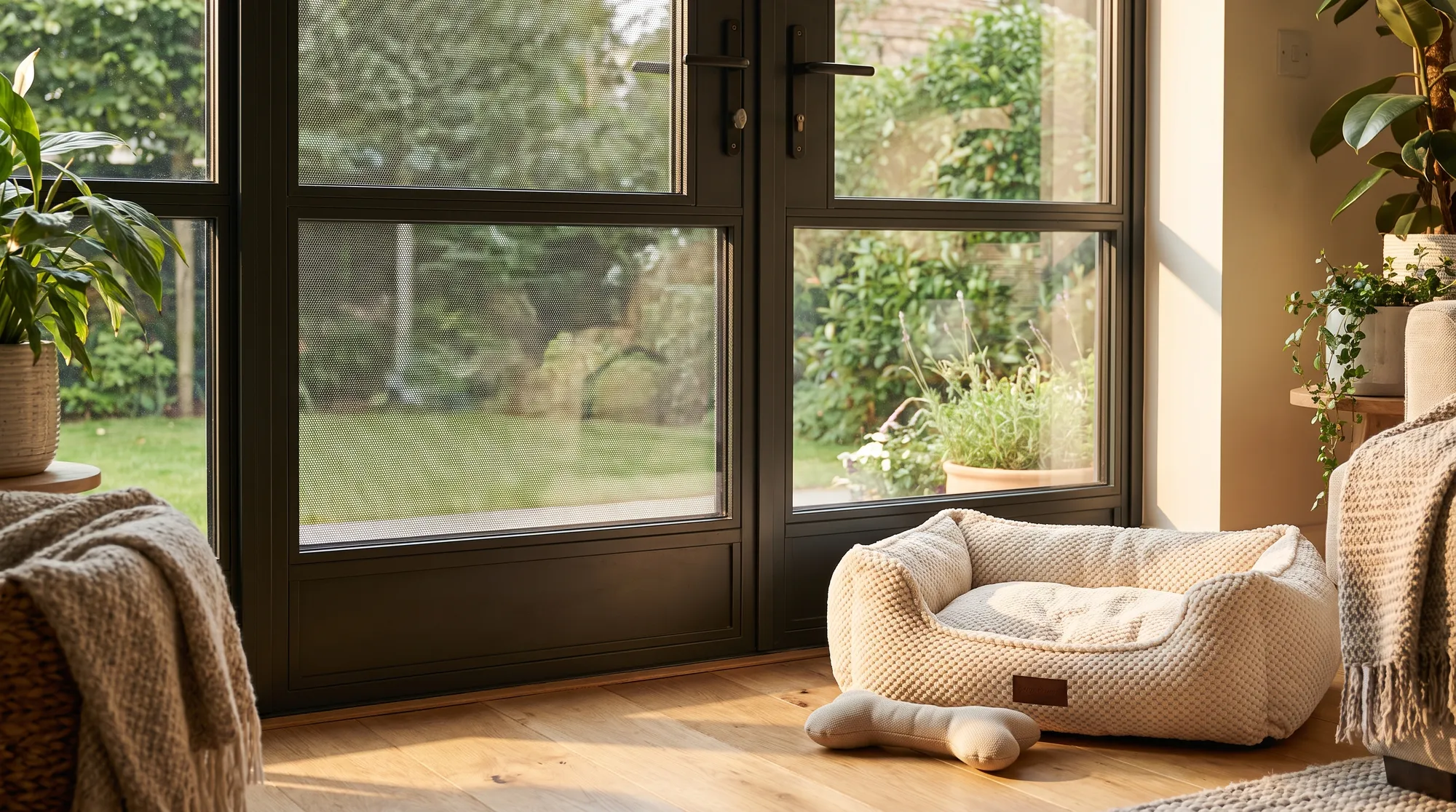
More than half of Quebec households share their home with a dog or cat, yet almost nobody thinks about the animals when choosing windows and doors. The result is shredded screens by the second summer, a gouged patio door by the third, and a cat perched somewhere you would rather it was not. Here is how to specify glazing, screens, panels and thresholds that survive claws, paws and enthusiasm — without making the house look like a kennel.
Pet-Resistant Screens: The First Upgrade That Pays
Standard insect screen is 0.011-inch fibreglass mesh, and a determined cat opens it with one swipe. Pet-resistant screen — usually sold as heavy-duty vinyl-coated polyester — is roughly seven times stronger, thick enough that claws slide off rather than hook in, and it fits the same spline channel as regular mesh. Rescreening an existing frame with it costs about 20 $ to 40 $ per window in materials, or 50 $ to 80 $ per window done professionally in the Montreal area.
The trade-offs are modest: pet mesh reduces airflow and visibility slightly compared with standard fibreglass, so many owners install it only on the windows and patio doors the animals actually use, and keep fine mesh elsewhere. For screen doors that a dog bumps at full speed, add a screen-door grille — a decorative aluminum or steel guard mounted over the lower half — which takes the impact before the mesh does.
For sliding patio doors, the screen's frame matters as much as its mesh. Look for heavy extruded-aluminum screen frames with metal corner keys rather than the light rolled frames that pop out of the track when a retriever leans on them. If a screen panel can be dislodged outward by 10 kg of steady pressure, it is a pet-launch hazard on any window above the ground floor.
- Standard fibreglass mesh: fails on first claw contact — fine for pet-free rooms
- Vinyl-coated polyester (pet screen): about 7× stronger, same installation method
- Aluminum mesh: dent-prone; creases stay visible, not ideal with pets
- Stainless security mesh: the premium option, roughly 100 $ or more per opening, effectively claw-proof
Door Scratches: Protecting the Lower Metre
Almost all dog damage to doors happens in the lowest 80 to 100 cm — the jumping and pawing zone at the exit the animal uses most. Steel entry doors with a factory-baked finish resist casual scratching far better than wood or wood-clad products, and fibreglass doors with a deep embossed grain hide the marks that do occur. If you are choosing a new back door for a household with a large dog, that argument alone favours steel or fibreglass over wood veneer.
Where a door already shows wear, a kick plate solves the problem permanently. Standard architectural kick plates in brushed aluminum or stainless steel cost 30 $ to 80 $, mount with four screws, and cover the exact area a dog attacks; clear polycarbonate scratch shields do the same job invisibly for about 25 $ to 60 $ and suit painted doors where a metal plate would look institutional. Both are ten-minute installations.
On patio doors, the vulnerable element is not the panel but the glass-adjacent frame and the screen, covered above. Vinyl patio door frames in darker colours show claw marks more than lighter ones because the scratches expose lighter material beneath the surface; if a dog waits at the glass every day, a light-coloured frame or an aluminum-clad exterior is the durable choice. A quality patio door with a robust frame, heavy screen and low-maintenance finish is the single best door investment a dog household can make.
Low Sills and Window Seats: Design for the Cat You Have
Cats will occupy the sunniest sill in the house whether you plan for it or not, so plan for it. A sill depth of at least 20 cm lets an average cat sit comfortably without balancing on the frame hardware; on new construction or full replacements, asking the installer for an extended interior sill (or a sill-depth jamb extension) adds little cost and creates a legitimate perch. Locate it at a south- or east-facing window and the cat will ignore your furniture for most of the day.
Height matters too. Sills at 45 to 60 cm above the floor are reachable by older or arthritic cats without a launch pad, while a bench, radiator cover or purpose-built window seat beneath a taller window does the same job and adds storage. Avoid perches directly over baseboard heaters: fur and 60-degree fins are a bad combination, and cats will absolutely sleep there in January.
Choose sill materials for claws and sun. PVC and painted MDF sills scratch and yellow; a laminate, stone-composite or hardwood sill with a durable finish shrugs off years of feline traffic. If condensation forms at the glass edge in winter — common on older double glazing — keep a washable pad on the perch, because a cat parked against wet glass all day is also a cat wicking moisture into your sill.
Ventilation Without Escapes or Falls
Every summer, Quebec veterinary clinics treat cats injured in falls from windows — the phenomenon is common enough to have a name, high-rise syndrome. The safe way to ventilate is to limit how far the sash can open: casement and awning windows with a limiter set around 10 cm, or hung and slider windows fitted with vent locks that stop the sash at a claw-proof gap. Hardware costs 10 $ to 25 $ per window and installs in minutes.
Never rely on an insect screen to hold back an animal; standard mesh and its spline are designed to keep bugs out, not to resist 5 kg of cat leaning on it. If you want fully open windows with pets in the room, the screen must be a pet-grade mesh in a securely fastened frame — or better, a window-mounted safety grille on the openings the animals favour.
Casement windows that crank outward have a hidden advantage for pet households: the opening geometry leaves no horizontal ledge on the inside, so there is nothing for a cat to sit on halfway out. Tilt-and-turn windows in tilt mode are the gold standard — the sash tips inward at the top, giving generous airflow with no gap an animal can reach. Both styles also seal more tightly against winter drafts than sliders, which pets and owners appreciate equally.
Thresholds and Entry Zones That Survive Traffic
A dog crosses the back-door threshold thousands of times a year, often at speed and with sand from the yard embedded in its pads. Composite and anodized-aluminum thresholds handle that abrasion for decades; soft wood thresholds and cheap painted saddles wear visibly within two or three seasons. On patio doors, prefer a low-profile threshold with a stainless or anodized track cap — it is easier on older dogs' joints and does not chip like painted aluminum.
Sliding patio door tracks are grit magnets, and grit under the rollers is what actually kills a slider. In a pet household, vacuum the track weekly in summer and check the rollers annually; a door that a dog nose-bumps open has properly adjusted rollers and a clean track. A washable outdoor mat on the exterior side and an absorbent one inside intercept most of what paws carry.
Weatherstripping at the door bottom takes pet abuse too. Brush-pile sweeps stand up to claws better than vinyl fins, which tear once nicked. If your entry door's sweep is shredded at one corner — the classic signature of a dog pawing the door to come in — replace it with a heavier aluminum-backed brush sweep for around 15 $ to 30 $ rather than another vinyl one.
Glass, Muddy Paws and Nose Art
Any glazing within a metre of the floor in a pet household should be tempered safety glass — and on patio doors and full-lite entry doors, Canadian standards already require it. Tempered glass resists the impact of a large dog hitting it at a run, and if it ever does break, it crumbles into blunt granules instead of shards. When ordering sidelights or floor-level windows, confirm tempered glazing explicitly; in stock products it is not always standard below sill heights where pets live.
For the daily reality of nose prints and paw smears, glass choice helps more than most people expect. Easy-clean coatings — factory-applied hydrophilic or hydrophobic layers — cause water to sheet rather than bead, so a spray and a squeegee remove dried slobber in seconds. Between panes, internal blinds (sealed in the glass unit) are the pet-proof alternative to cords and slats, which cats treat as toys and large dogs simply destroy.
Think about sightlines from the animal's height as well. A dog that can see the yard through a low glass panel or a patio door barks less at phantom sounds than one guessing behind a solid door, and a full-height glass unit gives a cat its television. This is one more argument for generous glazing on the garden side of the house — it genuinely calms the animals that live there.
Planning a Pet-Smart Window and Door Project
If replacements are on your horizon, fold the pet requirements into the specification instead of retrofitting later: pet-grade screens factory-installed, tempered glass at floor level, limiters on the bedroom windows, a steel or fibreglass rear door, and a patio door with heavy rollers and a robust screen frame. Individually these are small line items — typically 20 $ to 100 $ each on a quote — and together they add perhaps 2 to 4 % to a project while eliminating the most common damage and safety issues for the life of the products.
Ask the installer about warranty language too: screen mesh is normally a consumable excluded from coverage, but frame damage and roller wear are not, and a manufacturer whose screens are rated for pets will say so in writing. In Quebec, verify that any contractor quoting the work carries a valid RBQ licence and liability insurance, and confirm the person on site knows an animal lives in the house — propped-open doors and pets are how installation-day escapes happen.
Finally, sequence the work around the animals: one room at a time, pets boarded or closed in a finished room with water and white noise, and a walkthrough at the end of each day to check that every screen is latched and every limiter reinstalled before the crew leaves. A pet-smart plan costs almost nothing; an escaped cat during a window swap costs a very bad week.
Frequently Asked Questions
What screen material actually stands up to cats and dogs?
Vinyl-coated polyester pet screen, about seven times stronger than standard fibreglass mesh, is the practical choice — claws slide off instead of hooking in. It installs in the same spline channel as regular screen and costs about 20 $ to 40 $ per window in materials.
How do I stop my dog scratching the back door?
Protect the lowest metre: a brushed aluminum or stainless kick plate (30 $ to 80 $) or a clear polycarbonate shield (25 $ to 60 $) covers the pawing zone permanently. For a new door, choose steel or fibreglass over wood veneer — their finishes resist scratching far better.
Can I leave windows open for ventilation with a cat in the house?
Yes, if the opening is mechanically limited to about 10 cm with a vent lock or restrictor, which costs 10 $ to 25 $ per window. Never rely on an insect screen to hold an animal — standard mesh cannot resist a cat's weight, and falls from windows are a documented summer injury pattern.
What sill depth does a cat perch need?
About 20 cm of interior sill lets an average cat sit comfortably; a jamb extension during window replacement achieves this at little cost. Place the perch at a sunny south- or east-facing window, 45 to 60 cm above the floor or above a bench, and away from baseboard heaters.
Is special glass necessary for a large dog?
Any glazing within about a metre of the floor should be tempered safety glass, which Canadian standards already require on patio doors and full-lite entry doors. Tempered glass withstands a running impact, and if broken it crumbles into blunt granules rather than dangerous shards.
How much does pet-proofing add to a window and door project?
Surprisingly little — pet screens, tempered low glazing, vent limiters and a kick plate typically add 2 to 4 % to a full replacement project. Specified up front, they eliminate the shredded screens, gouged panels and safety risks that otherwise generate repair costs every year.