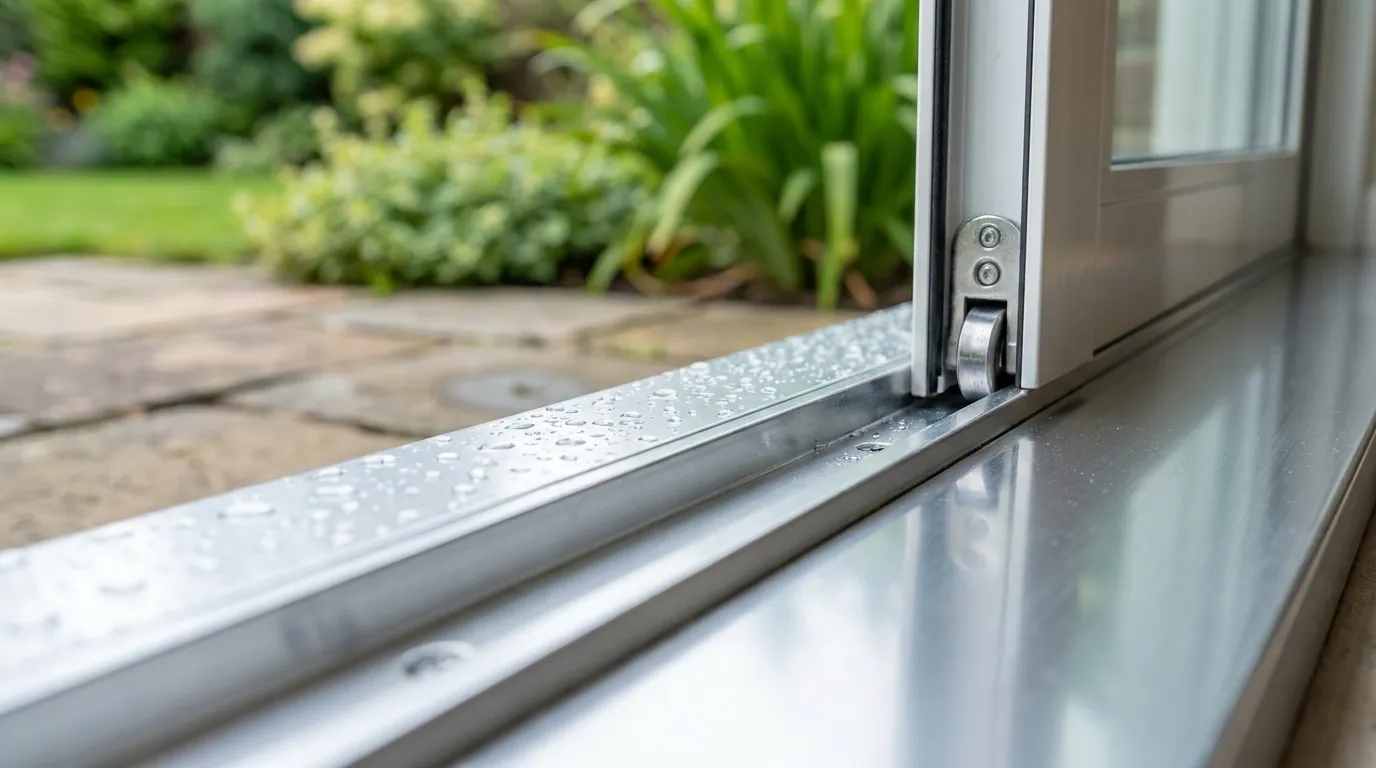
Summer is when patio and garden doors work hardest, opening dozens of times a day onto the deck, the barbecue and the backyard. It is also the ideal season to give them an hour of care, while the weather is warm and any adjustment you make will hold through fall. This guide walks you through cleaning, lubricating, sealing and tuning both sliding patio doors and hinged garden doors so they glide, seal and last through many more Quebec seasons.
Why summer is the right time
Quebec doors take a beating from the climate. Winter road grit and salt track indoors, spring pollen and rain leave film on the glass and tracks, and the freeze-thaw cycle stresses seals and hardware. By early summer, all of that has accumulated, and warm dry weather is the perfect window to clean it out and reset everything before the busy patio season.
Doing maintenance now also means adjustments actually last. Weatherstripping and sealants set better in warm temperatures, lubricants flow into rollers and hinges rather than seizing in the cold, and you can spot a failing seal on a mild day instead of during the first -30°C snap. A single afternoon in June or July pays off through the whole year.
The payoff is more than smooth operation. A patio or garden door that seals properly keeps conditioned air in and humid outdoor air out, protecting your air-conditioning bill in summer and your heating bill in winter. Well-kept hardware also lasts far longer, delaying the cost of new rollers, hinges or a full door replacement.
Cleaning tracks and rollers on sliding patio doors
The track is where a sliding patio door lives or dies. Grit, sand and dead leaves collect in the lower channel, and every time the door rolls over that debris it grinds the rollers and the track. Start by vacuuming the track thoroughly with a crevice tool, then scrub the corners and channel with a stiff brush, warm water and a little dish soap.
For baked-on grime, an old toothbrush and a cloth wrapped around a flat screwdriver reach into the corners where dirt hides. Dry the track completely afterward, because standing water and leftover grit are what corrode metal tracks and pit the rollers. Avoid harsh solvents that can damage the finish or the vinyl frame.
Inspect the rollers themselves at the bottom edge of the sliding panel. If the door drags, chatters or leaves a scraped line in the track, the rollers may be worn, flat-spotted or clogged with hair and lint. Clean around them, and if they no longer spin freely, plan to have them adjusted or replaced — worn rollers are the number-one cause of a hard-to-slide patio door.
- Vacuum the full length of both the inner and outer track channels.
- Scrub with warm soapy water and a stiff or toothbrush; rinse and dry fully.
- Wipe rollers clean and remove wrapped hair, lint or debris.
- Never use grease or oil on the track surface — it traps grit (see lubrication below).
Lubricating the right parts the right way
Lubrication is where good intentions often go wrong. Oil and grease attract dust and grit, turning a clean track into a grinding paste, so never apply them to the track surface a sliding door rolls on. Instead, use a dry silicone spray or a PTFE (dry Teflon) lubricant, which leaves a slick film without collecting dirt.
On a sliding patio door, apply a light coat of silicone to the track after cleaning, wipe away the excess, and cycle the door a few times to spread it. Add a small amount to the rollers if they are accessible, and treat the latch and lock mechanism so it engages smoothly. A little goes a long way; over-application just makes a mess.
Hinged garden doors need lubrication too, but on different parts. Put a drop of light machine oil or silicone on each hinge pin and work the door back and forth, and lubricate the multi-point lock rods and strike plates. Do this once in early summer and again in late fall, and the hardware will operate quietly and resist the corrosion that Quebec humidity encourages.
Checking weatherstripping and seals
Weatherstripping is the gasket that stops air, water and insects from sneaking around a closed door, and it is the component most likely to wear out. Run your hand along the seals with the door closed on a breezy day; if you feel a draft, see daylight, or find the foam or bulb compressed flat and hard, the seal is no longer doing its job.
Clean the weatherstripping gently with soapy water and let it dry, since dirt and grit accelerate wear. Look especially at the corners and the bottom sweep, which take the most abuse. Compressed, cracked or torn weatherstripping can usually be replaced as a strip or kit, and doing so restores the door’s seal without replacing the whole unit.
A failing seal costs you money in both seasons: conditioned air escapes in July and heated air escapes through the -30°C winter. It also lets in humidity that can encourage condensation and, over time, mould around the frame. Catching a worn seal in summer is far cheaper than living with drafts and higher energy bills all year.
Caring for screens and glass
Summer is screen season, so make sure yours are actually keeping insects out. Remove each screen, vacuum or brush off the mesh, and wash it with mild soapy water and a soft brush before rinsing and letting it dry. Inspect for holes, tears and gaps at the edges; small holes can be patched, while a badly torn screen is inexpensive to re-mesh or replace.
Check that the screen rolls or slides smoothly in its own track and that the spline holding the mesh is seated. On a garden door with a retractable or hinged screen, verify the frame is square and the latch catches. A screen that will not stay closed is an open invitation to mosquitoes during a Quebec summer evening.
For the glass, clean both sides with a standard glass cleaner or a vinegar-and-water solution and a microfibre cloth, avoiding abrasive pads that scratch. If you have a sealed double- or triple-glazed unit and notice fog or moisture between the panes, the seal has failed and the glass unit needs replacing — that is not something cleaning can fix, but the glass can be swapped without replacing the whole door.
- Wash mesh with mild soap and a soft brush; rinse and dry before reinstalling.
- Patch small holes; re-mesh or replace badly torn screens.
- Confirm screens slide freely and latch closed against insects.
- Fog between the panes means a failed sealed unit — replace the glass, not the door.
Adjusting sliding doors and garden-door hardware
If a clean, lubricated sliding door still drags or does not latch squarely, it likely needs a roller adjustment. Most sliding patio doors have adjustment screws at the bottom corners of the moving panel, usually behind small plugs. Turning them raises or lowers that corner so the door sits level in the frame and the lock lines up with the keeper.
Make small quarter-turn adjustments, testing the slide and the latch after each one, and adjust both corners so the door hangs evenly rather than tilting. The goal is a panel that glides with one finger and locks without lifting or forcing. If the door still binds after adjusting, the rollers themselves are likely worn and should be replaced.
For a hinged garden door, sagging or rubbing usually traces to the hinges or the strike plate. Tighten loose hinge screws first; if a screw spins freely the hole has stripped and a longer screw into the framing will bite again. If the door still catches, the strike plate or hinges may need minor repositioning so the multi-point lock engages cleanly and the door closes with a solid, even seal.
Your seasonal patio and garden door checklist
Keep this routine short and repeatable. A thorough session in early summer, plus a quick repeat before winter, keeps both door types operating smoothly and sealing tightly year-round. Work top to bottom — glass and screens first, then seals, then tracks and hardware — so debris you loosen falls into areas you clean last.
If you find worn rollers, failed sealed glass units, or weatherstripping that no longer seals, those are worth addressing before winter rather than after. As an RBQ-licensed manufacturer in Saint-Laurent, we can supply replacement parts for our doors and advise when a repair makes more sense than a full replacement.
- Glass: clean both sides; check for fog between the panes.
- Screens: wash mesh, patch holes, confirm they latch.
- Weatherstripping: inspect for drafts, compression and tears; replace worn strips.
- Tracks: vacuum and scrub; dry completely.
- Lubrication: silicone or PTFE on tracks and rollers; light oil on hinges and locks.
- Adjustment: level sliding panels; tighten hinges; confirm smooth latching.
Frequently Asked Questions
How often should I maintain my patio and garden doors?
A thorough clean and tune-up twice a year works well: once in early summer and once before winter. Vacuum the tracks more often if you get heavy foot traffic, pets, or a lot of pollen and dust through the summer.
What lubricant should I use on a sliding patio door?
Use a dry silicone spray or a PTFE (dry Teflon) lubricant on the track and rollers. Avoid oil or grease, which attract grit and turn the track into a grinding paste that wears rollers out faster and makes the door harder to slide.
My sliding door is hard to open. What should I check first?
Start by cleaning the track of grit and debris, then check the rollers for hair, lint or flat spots. If it still drags, a roller adjustment at the bottom corners of the panel usually helps; if that fails, the rollers are likely worn and should be replaced.
There is fog between the two panes of glass. Can I clean it out?
No. Fog between the panes means the sealed glass unit has failed and lost its gas fill, and cleaning cannot fix it. The good news is the glass unit can be replaced on its own without buying a whole new door, restoring insulation and clarity.
How do I know if my weatherstripping needs replacing?
Close the door on a breezy day and feel along the seals for drafts, or look for daylight, cracks, tears, or foam that is compressed flat and hard. Any of these means the seal is failing; most weatherstripping can be replaced as a strip or kit to restore the seal.
Can I adjust a sagging garden door myself?
Often yes. Tighten the hinge screws first, and if one spins freely, replace it with a longer screw that reaches the framing. If the door still catches or the lock will not engage, the strike plate or hinges may need minor repositioning, which is worth having done before winter.