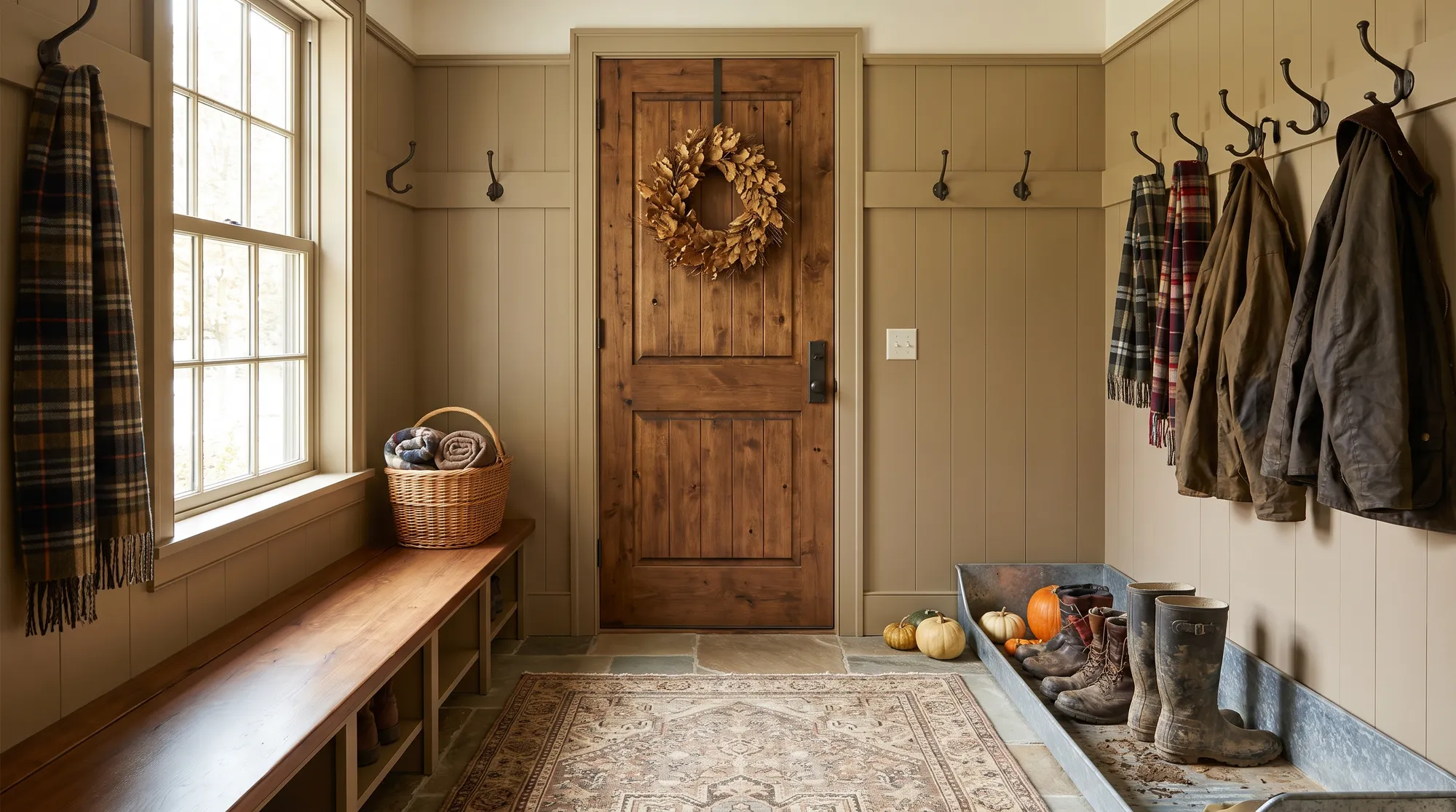
Between November slush, January deep-freeze and the April melt, a Quebec entry works harder than any other square metre of the house. The right door, threshold and layout turn the daily assault of boots, salt and snow into a thirty-second routine instead of a permanent mess. Here is how to design an entry built for real Quebec life.
Why Quebec Entries Take a Beating
A Montreal-area entry endures dozens of freeze-thaw cycles every winter, and each one pushes moisture into any gap it can find. Add calcium and sodium chloride tracked in from sidewalks and driveways, and you have a corrosive slurry sitting against your threshold for five months a year. The temperature difference between a heated hallway at 21 degrees and a minus 25 landing also puts constant stress on seals, hinges and glazing. No other doorway in North America outside the Prairies faces a tougher combination.
The damage shows up in predictable ways: warped or delaminated thresholds, pitted aluminum sills, rusted screws and strike plates, stained flooring and a draft you can feel from the couch. Builder-grade entries with raw wood sills and single compression seals were simply not designed for this workload. Most of them start failing within five to eight winters.
The solution is to design the entry for the worst week of February, not for the July real-estate photo. That means choosing every component, from the sill pan up to the coat hooks, with slush, salt and 40-degree temperature swings in mind. Done right, the same choices also make the space calmer and easier to keep clean the rest of the year.
Thresholds That Survive Slush and Salt
The threshold is the single most abused part of a Quebec entry, so it deserves the most scrutiny. Look for a composite or anodized-aluminum sill with a thermal break, which stops the metal from conducting the cold indoors and frosting on the interior side. An adjustable cap lets you tune the compression against the door sweep as seasons change, keeping the seal tight in January without making the door drag in July.
Just as important is what sits underneath: a proper sill pan with back and end dams catches any water that gets past the door and drains it outward instead of into your subfloor. The exterior side should slope away from the house so meltwater never pools against the seal. Combined with a full-perimeter compression weatherstrip and a double-fin door sweep, this assembly keeps both water and minus 25 air where they belong.
- Thermally broken sill — no cold bridge, no interior frost line
- Adjustable threshold cap — seasonal tuning of the seal
- Sill pan with end dams — drains incidental water outward
- Composite substrate — will not rot, swell or delaminate
- Salt-resistant anodized finish — shrugs off de-icing chemicals
The Double-Door Vestibule Advantage
Quebec builders figured out the airlock long before energy codes existed: the classic sas d'entrée, or double-door vestibule, is still the single best upgrade for a cold-climate entry. Two doors separated by a small buffer zone mean the outside door can open into a snowstorm without dumping frigid air straight into the living space. The vestibule also gives snow-covered coats and boots a place to shed before they reach the finished floor.
For the airlock to work, the space needs enough depth that one door can close before the other opens, roughly 1.2 to 1.5 metres at minimum. In renovations, a vestibule can often be carved out of a wide hallway or added as a small heated extension on the front of the house. Where there is truly no room, a quality storm door over a well-sealed entry door captures part of the benefit at a fraction of the cost.
The energy case is real: an unconditioned or semi-conditioned vestibule dramatically cuts infiltration losses every time the door cycles, which in a family home can be fifty times a day. It also protects the inner door from frost, so its hardware, seals and finish last years longer. In duplexes and triplexes from Rosemont to Limoilou, that is exactly why century-old vestibules are still doing their job.
Layouts That Handle Storm Days
Think about how the entry works when 30 centimetres fall overnight. An inswing exterior door remains the Quebec default for good reason: an outswing door can be blocked by drifted snow on the landing, though outswing gains popularity for wind resistance where a covered porch keeps the landing clear. Either way, a roof overhang or awning above the door keeps freezing rain off the threshold and cuts ice buildup on the steps.
Inside, plan a hard-wearing landing zone of at least one metre before any finished flooring begins, with a recessed or heavy rubber-backed mat that can drink a full boot's worth of meltwater. Keep a 90-centimetre clear path so two people in parkas, or one person and a stroller, can pass without a shoulder check. A motion-activated light at the door and a sturdy grab point beside the steps make icy arrivals safer for everyone, especially grandparents.
Finally, put hooks at two heights: adult shoulder height and about one metre for children. A kid who can hang their own snowsuit will actually do it, which is half the battle of a Quebec winter morning.
Bench, Storage and Traffic Flow
A functional mudroom follows the order of undressing: sit, pull off boots, hang the coat, drop mitts and tuque somewhere they can dry. Place the bench immediately inside the door, with boot storage below it and hooks or lockers directly beside it, so nobody crosses the room in wet boots. If the sequence forces even two extra steps, slush ends up on the floor every single time.
Closed storage hides the chaos but open storage dries gear faster; the best Quebec mudrooms mix both. Use open hooks and slatted shelves for the daily rotation of coats and snow pants, and closed cabinets for off-season storage and the recycling of single mittens. Boot trays with raised ribs and a drainage lip keep meltwater and gravel contained, and a spot near a radiator, heated floor loop or low-wattage boot dryer means gear is dry by morning.
If the entry doubles as the family command centre, add a shallow shelf for keys and mail and one duplex outlet for charging. Resist anything deeper: counters in mudrooms become dumping grounds within a week.
- Bench at 45 cm height with boot trays underneath
- Double-height hooks — adults and kids
- Slatted or ventilated shelf for drying mitts and tuques
- Closed cabinet for off-season gear
- Washable mat plus hard flooring for the first metre
- Heat source nearby so gear dries overnight
Materials That Shrug Off Winter
Flooring takes the worst of it, and porcelain tile remains the champion: it is unaffected by water, salt and grit, and a textured matte finish stays grippy when wet. Slate and sealed concrete also perform well; hardwood within two metres of the threshold is a renovation waiting to happen. Whatever the floor, choose a dark grout and a washable matte or satin paint on the lower walls, and add a kick plate or panel wainscoting where boots and hockey bags hit.
For the door itself, fiberglass has become the Quebec favourite because it cannot rust, will not dent like steel, and its finish stands up to salt spray at the bottom edge where steel doors typically blister first. A polyurethane-injected core delivers roughly four times the insulation of a solid wood door, and composite bottom rails and frames eliminate the rot that kills wooden jambs. If you love the look of wood, modern woodgrain fiberglass is convincing enough to fool guests at handshake distance.
Glazing deserves attention too: sidelights and door lites should be double- or triple-pane low-E units with warm-edge spacers, otherwise they become condensation magnets in January. Frosted or textured glass adds privacy at the front door without sacrificing the daylight that makes a small entry feel bigger.
Choosing the Right Entry Door
Start with certification: an ENERGY STAR certified door tested for the Canadian climate zones guarantees the core, glazing and weatherseals were designed for our winters, not a generic North American average. A multi-point locking system, which anchors the door at three points instead of one, does double duty in Quebec: it improves security and pulls the entire slab evenly against the weatherstripping, eliminating the corner drafts common with single-latch doors. Insist on a composite or PVC-clad frame and brickmould so the assembly around the door lasts as long as the door itself.
Fit and installation matter as much as the product. A door measured and installed by the manufacturer, plumb, square, properly shimmed and foamed with low-expansion insulation, will seal correctly through hundreds of freeze-thaw cycles. Explore the options, from classic steel to woodgrain fiberglass with custom glazing, in our exterior door collection, manufactured in Saint-Laurent and built specifically for Quebec winters.
Budget realistically: a quality installed entry system in Quebec typically runs from about 2,500 $ to 6,000 $ CAD depending on glazing, sidelights and hardware. Spread over the twenty-five-plus years a good door lasts, the difference between builder-grade and Quebec-grade is a few dollars a month, and you feel it every February.
Frequently Asked Questions
Is a double-door vestibule worth it in a small home?
Yes, if you can find even 1.2 metres of depth. The airlock effect cuts heat loss every time the door opens and gives wet gear a place to land. In tight spaces, a quality storm door over a well-sealed entry door delivers part of the same benefit.
Should my entry door swing in or out for snow?
Inswing remains the Quebec standard because drifted snow can block an outswing door on an uncovered landing. Outswing doors seal slightly better against wind, so they make sense under a covered porch that stays clear. Either way, an overhang above the door reduces ice on the threshold.
What threshold material resists road salt best?
A composite substrate with an anodized-aluminum, thermally broken cap is the most durable combination. It will not rot like wood or corrode like untreated metal, and the thermal break prevents interior frost. An adjustable cap also lets you retune the seal each season.
Steel or fiberglass for a Quebec entry door?
Both insulate well with a polyurethane core, but fiberglass cannot rust and resists dents and salt blistering at the bottom edge, where steel doors usually fail first. Steel remains a solid budget choice under a covered entry. For exposed facades, fiberglass generally lasts longer with less maintenance.
How do I stop the draft at the bottom of my door?
First adjust the threshold cap upward and check the door sweep for wear; both are ten-minute fixes. If the draft persists, the slab may be warped or the frame out of square, which no sweep can compensate. At that point a properly installed replacement door solves the draft and cuts heating costs at the same time.
Can I add a vestibule to an existing house?
Often, yes. Many renovations enclose a covered porch, extend the entry by a metre, or partition a wide hallway with a second interior door. A building permit is usually required for an addition, so check with your municipality, but the comfort and energy payback in Quebec is among the best of any entry upgrade.