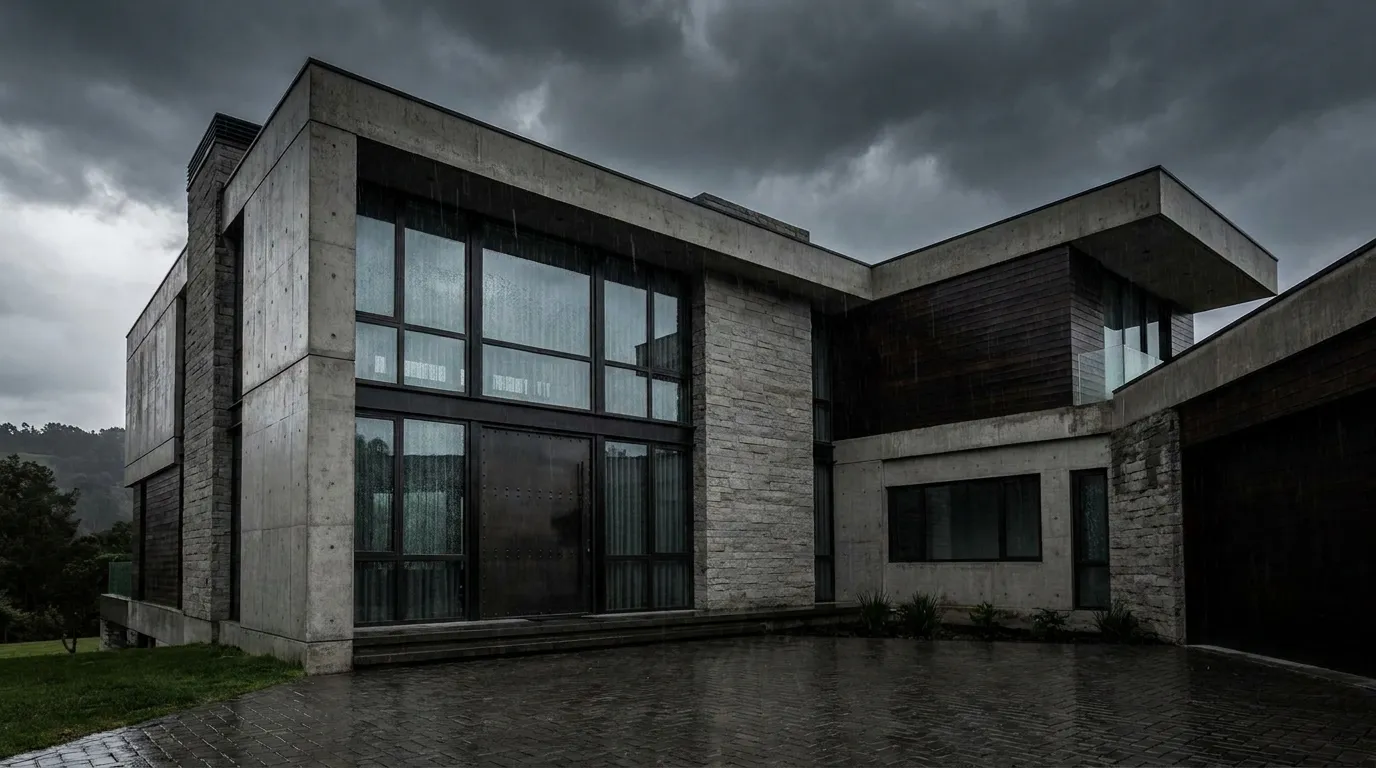
Quebec summers are no longer just hot — they are stormy. Fast-moving thunderstorms, damaging wind gusts, hail and wind-driven debris put ordinary windows and doors to the test every season. This guide explains how laminated glass, reinforced frames and multipoint locking hardware keep the weather outside where it belongs.
Quebec’s stormier summers
Summer in southern Quebec now delivers a steady run of severe thunderstorms from late May through September, and the pattern has been trending more intense. These systems arrive fast, dumping heavy rain in minutes and pushing straight-line wind gusts that regularly reach 90 to 100 km/h, with the worst cells producing damaging downbursts and the occasional tornado warning across the Montérégie and Outaouais.
Hail is the part homeowners underestimate. A single strong cell can drop hailstones from pea size to golf-ball size in a few minutes, and that ice arrives with enough velocity to crack ordinary glass, dent capping and shred screens. Wind-driven debris — branches, roof granules, patio furniture, a neighbour’s unsecured umbrella — does the rest, turning loose objects into projectiles against your most exposed openings.
The financial reality follows the weather. Summer storm damage now drives a large share of Quebec home-insurance claims, and repeated claims push premiums up for everyone. Hardening the two most vulnerable parts of the envelope — the windows and the exterior doors — is one of the most direct ways a homeowner can reduce both the risk of catastrophic damage and the odds of an expensive claim.
- Wind gusts: severe cells regularly push 90–100 km/h across the region
- Hail: pea- to golf-ball-size stones crack glass and shred screens
- Flying debris: branches and loose objects become projectiles
- Insurance pressure: storm claims are a growing share of Quebec payouts
Laminated and reinforced glass
The heart of an impact-resistant window is laminated glass: two panes of glass permanently bonded to a tough interlayer, usually polyvinyl butyral (PVB), sandwiched between them. When something strikes hard enough to break the glass, the interlayer holds the fragments in place instead of letting them fly inward or leave a gaping hole. The pane may crack, but it stays in the frame and keeps the wind, rain and debris out.
This is fundamentally different from standard tempered glass, which is strong but shatters into small pieces and leaves the opening breached. Laminated glass is the same technology that keeps a car windshield intact after a stone chip, and in a home it does double duty: it resists storm impacts and it dramatically improves security, since an intruder cannot simply smash through and reach inside.
For the highest-exposure openings — large patio doors, ground-floor windows facing open yards, anything on the storm-facing side of the house — you can specify thicker interlayers or combine lamination with tempering for an assembly that resists both breakage and penetration. As a bonus, that same laminated build blocks a large share of outside noise and screens out virtually all UV, protecting floors and furniture from fading.
- Laminated PVB interlayer: holds glass together on impact, no breach
- Vs. tempered: tempered is strong but shatters and leaves an opening
- Security bonus: resists smash-and-grab break-ins
- Extras: cuts outside noise and blocks nearly all UV fading
Strong frames and multipoint locks
Impact-resistant glass is only as good as the frame holding it. A storm-ready window uses a rigid, reinforced frame — heavy-wall PVC with internal steel or aluminum reinforcement, or a hybrid PVC-aluminum profile — engineered so that wind pressure and impacts transfer into the wall rather than deflecting or popping the sash out of its seat. The glazing must be captured deep in the frame so that a struck pane stays mechanically locked in place.
Locking hardware is the other half of the equation. A multipoint locking system engages the sash or door leaf at several points around the perimeter with a single throw of the handle, clamping it evenly against the weatherstripping instead of at just one central latch. Under storm wind pressure that even clamping resists the pumping and racking that can pop a single-point lock, and it also makes the opening far harder to force.
The same logic applies with even more force to exterior doors, which are large, exposed and a favourite failure point in a windstorm. A storm-worthy entry door pairs a solid, reinforced slab and frame with a multipoint lock and robust hinges, and ideally sits in a properly anchored and flashed opening. Explore the styles and construction on our windows page and exterior doors page.
- Reinforced frames: steel- or aluminum-reinforced profiles transfer load to the wall
- Deep glazing capture: keeps a struck pane locked in the frame
- Multipoint locks: clamp evenly around the perimeter, resist wind racking
- Robust hinges & anchoring: critical on large, exposed exterior doors
Protecting your home and its contents
The moment a window or door fails in a storm, the damage compounds fast. A breached opening lets wind and horizontal rain straight into the house, soaking drywall, flooring and possessions within minutes, and a sudden rush of wind pressure through a broken window can even stress the roof structure from the inside. Keeping the envelope intact is not just about the window — it is about protecting everything behind it.
Impact-resistant assemblies also buy time and safety. Laminated glass that cracks but holds keeps the weather out until the storm passes and you can arrange a proper repair, rather than forcing a dangerous scramble to board up a gaping hole in high wind. For families in the more tornado- and downburst-prone corridors of southern Quebec, that resilience is genuine peace of mind during a warning.
There is a quieter benefit too: security and comfort year-round. The same laminated glass and multipoint hardware that shrug off hail make forced entry far harder and the home noticeably quieter and better sealed. You are not paying purely for a handful of storm days a year — you are upgrading the daily performance of the openings as well.
Lowering your insurance risk
Insurers price risk, and a home hardened against the most common storm claims is a lower risk. While programs vary by carrier, many Quebec insurers look favourably on impact-resistant glazing and reinforced, well-secured doors when assessing a property, and some will discuss premium considerations or better terms for demonstrable resilience upgrades. It is always worth asking your broker what documentation they need.
The larger financial story is claims avoided. A single hail or windstorm event that would have smashed ordinary windows and flooded a room can pass a storm-hardened home with little more than cosmetic marks on the capping. Avoiding even one significant claim protects your deductible, your premium history and the months of disruption that come with water-damage remediation.
Keep good records to capture the benefit. Save the product specifications, the laminated-glass and hardware ratings, and the RBQ-licensed installer’s invoice, then share them with your insurer. Documented, professionally installed impact-resistant openings are far easier to credit than an undocumented upgrade the adjuster has to take on faith.
What to look for when you buy
Not every window marketed as strong is truly storm-ready, so focus on the assembly, not the brochure adjectives. Ask specifically whether the glass is laminated with a PVB interlayer, how the frame is reinforced, and whether the locking hardware is genuinely multipoint. A credible manufacturer will also match the glazing and frame spec to the opening’s exposure rather than selling one build for the whole house.
Installation quality decides whether all that engineering performs. The strongest window fails if it is set in an out-of-square opening, anchored with too few fasteners, or flashed poorly so water tracks in behind it. Insist on a licensed RBQ contractor, proper mechanical anchoring, low-expansion foam and a continuous, correctly lapped flashing detail that ties the unit into your wall’s water- and air-barrier.
Finally, prioritize by exposure and budget in phases if you need to. The storm-facing elevation, large patio doors and ground-floor openings deliver the most protection per dollar and are the natural place to start. Get a professional assessment of which openings are most vulnerable, then build a plan that hardens the highest-risk ones first.
- Confirm laminated glass with a PVB interlayer, not just tempered
- Ask how the frame is reinforced and how deep the glazing is captured
- Require multipoint locking hardware on windows and doors
- Insist on an RBQ-licensed installer with proper anchoring and flashing
Frequently Asked Questions
What makes a window impact-resistant?
The core is laminated glass — two panes bonded to a tough PVB interlayer that holds the glass together when struck, so it cracks but does not leave an open breach. That glass is paired with a reinforced frame and multipoint locking hardware that transfer storm loads into the wall.
Is laminated glass the same as tempered glass?
No. Tempered glass is strong but shatters into small pieces and leaves the opening exposed. Laminated glass keeps the fragments bonded to an interlayer so the pane stays in the frame — the same idea as a car windshield — which is why it resists both storms and break-ins.
Do I really need impact-resistant windows in Quebec?
Southern Quebec summers now bring frequent severe thunderstorms with 90 to 100 km/h gusts, hail and flying debris. Impact-resistant glazing is most valuable on storm-facing elevations, large patio doors and ground-floor openings, which take the brunt of that weather.
Will impact-resistant windows lower my insurance?
Programs vary by carrier, but many Quebec insurers view impact-resistant glazing and reinforced, well-secured doors favourably, and some may discuss better terms for documented resilience upgrades. Keep the product ratings and your RBQ installer’s invoice to share with your broker.
Are multipoint locks worth it?
Yes. A multipoint lock clamps a window or door evenly at several points with one handle throw, resisting the wind pressure that can pop a single-point latch and making forced entry much harder. It also improves the seal, which helps with air-tightness and comfort year-round.
Do impact-resistant windows have other benefits?
Definitely. The same laminated glass that resists hail blocks a large share of outside noise and screens out nearly all UV, protecting floors and furniture from fading, while the reinforced hardware boosts security. You gain daily performance, not just storm-day protection.