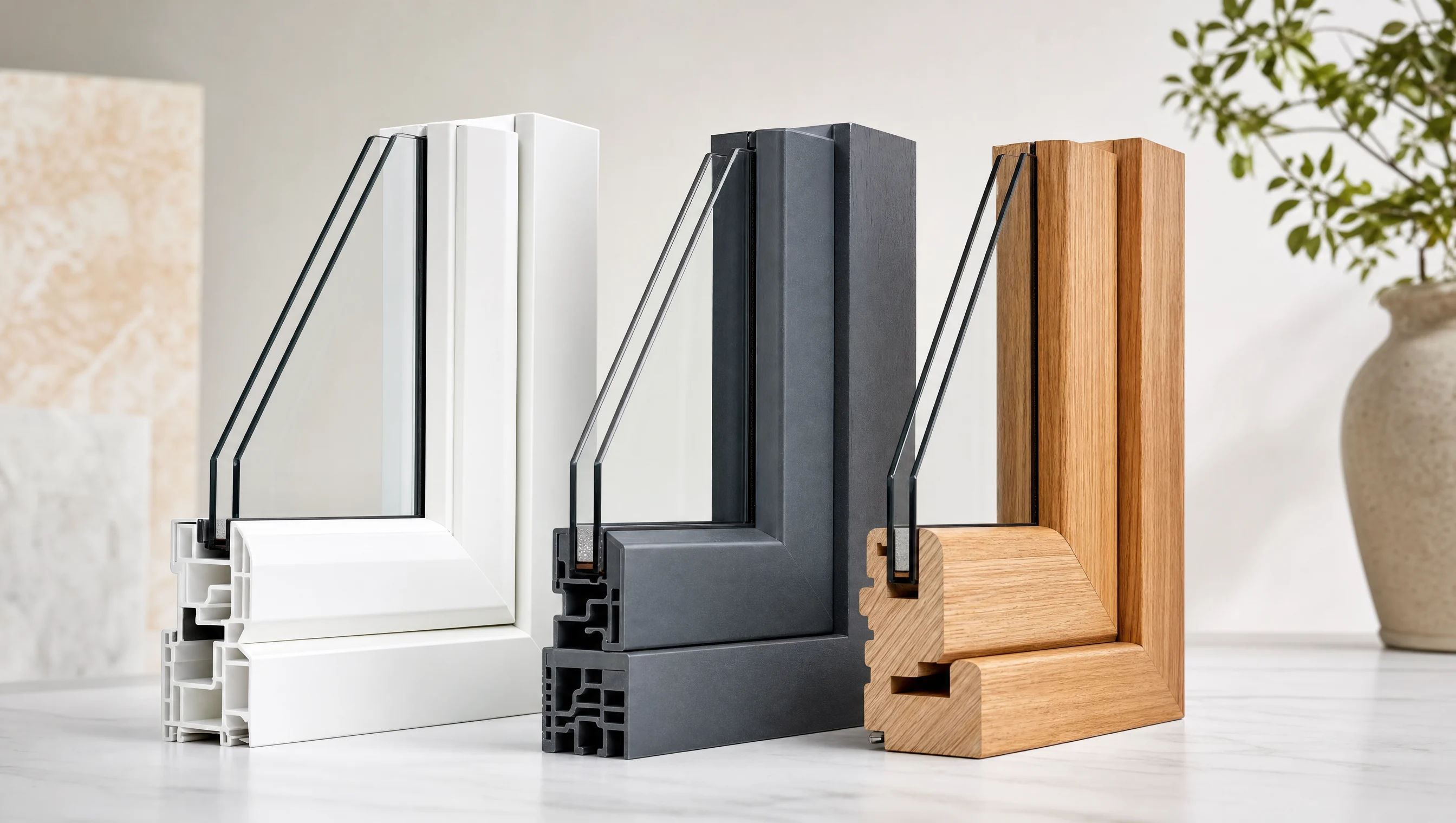
The glass gets the glamour, but the frame decides how a window ages through twenty Quebec winters. Fiberglass, vinyl and wood each bring a distinct mix of strengths, weaknesses and price — and the right pick depends as much on your maintenance appetite as your budget. Here is a balanced, Quebec-specific comparison to help you choose with confidence.
Why the Frame Material Matters Here
In a milder climate, frame choice is mostly about looks and budget. In Quebec, it is also a structural and thermal decision. Our winters swing from autumn rain to deep January cold and back to spring thaw, exposing every frame to relentless freeze-thaw cycling that finds the weak point in any material.
A frame must do three jobs at once: insulate against heat loss, stay dimensionally stable through temperature extremes, and seal tightly against wind-driven rain and snow. A material that excels at one can fall short on another, which is why there is no universal winner. The best choice is the one matched to your house, your exposure and how much upkeep you are willing to do.
This guide walks through thermal performance, durability, maintenance, aesthetics, cost and resale for the three dominant materials. Read it with your own priorities in mind, because the trade-offs are real and personal.
Vinyl (uPVC): The Value Workhorse
Vinyl — technically unplasticized polyvinyl chloride, or uPVC — dominates the Quebec replacement market for good reason. It insulates well thanks to hollow multi-chamber profiles, never needs painting, and resists moisture, salt and rot completely. For a homeowner who wants strong performance without ongoing maintenance, it is hard to beat on value.
Modern uPVC frames are welded at the corners into a single rigid unit, which keeps them airtight over decades. The main limitation is thermal movement: vinyl expands and contracts more than other materials across our temperature range, so quality of manufacturing and reinforcement matters, especially on large or dark-coloured frames. Reputable suppliers engineer for this, but a cheap extrusion can warp or develop seal stress over time.
Cost typically runs from roughly $500 to $1,000 installed per standard window, making vinyl the most accessible option. Explore our engineered range on the uPVC windows page to see how a quality profile is built. For most Montreal, Laval and South Shore homes, vinyl is the sensible default.
- Thermal: very good — insulating multi-chamber profiles.
- Maintenance: minimal — no painting, wipe clean.
- Lifespan: roughly 25–35 years with quality extrusion.
- Cost (installed): about $500–$1,000 per window.
Fiberglass: The Performance Premium
Fiberglass frames are made from glass fibres set in resin — essentially the same material family as the glass inside the window. That gives them a standout property for Quebec: their thermal expansion rate is nearly identical to the glass they hold, so the seal experiences far less stress through freeze-thaw cycling. The result is excellent long-term seal integrity and resistance to warping.
Fiberglass is also exceptionally strong and dimensionally stable, allowing slimmer frames and larger glass areas without sagging. It accepts paint, so you can refinish or change colour later — a flexibility vinyl lacks. The trade-offs are price and availability: fiberglass costs more and fewer manufacturers offer it, so lead times can be longer.
Installed costs commonly land between $800 and $1,600 per window, positioning fiberglass above vinyl but below high-end wood. For homeowners who want maximum durability, dimensional stability and the option to repaint, the premium often justifies itself over a 30-plus-year lifespan.
- Thermal: excellent — expansion matched to the glass.
- Maintenance: low — paintable, very stable.
- Lifespan: 30–50 years, outstanding seal longevity.
- Cost (installed): about $800–$1,600 per window.
Wood: Warmth and Heritage Character
Wood is the original window material, and nothing matches its natural warmth, depth of grain and heritage authenticity. It is also a genuinely good insulator, with low thermal conductivity that keeps interior surfaces comfortable. For period homes in Westmount, Outremont or Old Montreal, wood preserves architectural integrity in a way synthetic materials cannot replicate.
The catch is maintenance. Bare or painted wood exposed to Quebec’s moisture, UV and freeze-thaw requires periodic refinishing — typically resealing or repainting every few years — or it will check, swell and eventually rot. Many premium wood windows now use an exterior aluminum or fiberglass cladding to shield the wood from weather while keeping the warm wood interior, which dramatically cuts upkeep.
Wood and clad-wood windows are the most expensive option, often $1,000 to $2,500 or more installed per window depending on species, cladding and custom detailing. They reward homeowners who value aesthetics and authenticity and accept the maintenance commitment that uncladded wood demands.
- Thermal: very good — low natural conductivity.
- Maintenance: high if uncladded — periodic refinishing.
- Lifespan: 30+ years with diligent care or cladding.
- Cost (installed): about $1,000–$2,500+ per window.
How Each Survives Freeze-Thaw
Freeze-thaw is the single harshest test a Quebec window faces, and the three materials respond differently. Fiberglass is the standout because its expansion rate so closely matches the glass — the assembly moves as one piece, minimizing seal fatigue across thousands of cycles. This is its strongest argument in our climate.
Vinyl performs reliably when well made but moves the most thermally, so the engineering of the profile and any internal reinforcement is what separates a frame that lasts 30 years from one that distorts. Choosing a reputable manufacturer matters more for vinyl than for any other material. Dark colours, which absorb more heat, raise the stakes further.
Wood is dimensionally stable when dry but vulnerable when moisture penetrates a failed finish; freeze-thaw then drives water expansion inside the grain, accelerating decay. Cladding largely solves this by keeping water off the wood entirely. In short: fiberglass wins on raw stability, vinyl wins on value-for-stability when well built, and wood needs protection to keep up.
Environmental Notes and Resale Value
On the environmental front, each material has nuances. Wood is renewable and biodegradable but demands more lifetime maintenance and finishing products. Fiberglass is durable and dimensionally stable, meaning fewer replacements over the building’s life, though its manufacturing is energy-intensive. Vinyl is long-lasting and increasingly recyclable, and its low maintenance avoids decades of paint and solvent use.
For resale, buyers across Montreal and the South Shore consistently value energy-efficient, low-maintenance windows, and any of the three in good condition adds appeal. Wood and clad-wood carry premium curb appeal in heritage neighbourhoods, while fiberglass signals quality to discerning buyers. Vinyl’s broad acceptance and value make it the safest mainstream resale choice.
Whatever material you favour, ensuring the unit is ENERGY STAR qualified for our climate protects both comfort and resale value. Browse the full lineup on our windows page, and our team can help you match material to your home and budget.
Choosing the Right Material for Your Home
Start with honest priorities. If budget and low maintenance lead your list, vinyl delivers excellent performance for the money and is the right answer for most homes. If you want the longest-lasting seal, slim sightlines and the option to repaint, fiberglass earns its premium and ages beautifully through freeze-thaw.
If authenticity and warmth are non-negotiable — particularly in a heritage property — wood or clad-wood is worth the investment, provided you accept the upkeep that uncladded wood requires. Many homeowners mix materials, using premium frames on street-facing elevations and value frames elsewhere.
There is no wrong answer, only the right match for your house, exposure and habits. When you are ready to compare real products side by side, start with our uPVC windows and the broader windows collection, then ask us for a quote tailored to your project.
Frequently Asked Questions
Which window frame material is best for Quebec winters?
There is no single best — fiberglass offers the most stable seal through freeze-thaw, vinyl delivers the best value-for-performance when well made, and wood provides warmth and heritage character with more maintenance. The right pick depends on your budget and upkeep appetite.
Is fiberglass really worth more than vinyl?
For many homeowners, yes. Fiberglass expands at nearly the same rate as the glass, so its seal endures freeze-thaw exceptionally well, and it can be repainted. If you want maximum longevity and slim frames, the premium often pays off over 30-plus years.
How much maintenance do wood windows need in Quebec?
Uncladded wood needs periodic refinishing — typically resealing or repainting every few years — to resist moisture and freeze-thaw. Clad-wood windows with an aluminum or fiberglass exterior dramatically reduce that upkeep while keeping the warm wood interior.
What do these windows cost installed in CAD?
As a general guide: vinyl runs about $500 to $1,000 per window, fiberglass about $800 to $1,600, and wood or clad-wood about $1,000 to $2,500 or more. Size, glazing and custom details shift these ranges.
Does vinyl warp in extreme cold?
Quality uPVC engineered for Quebec resists distortion, but vinyl moves more thermally than other materials, so manufacturing quality and reinforcement matter. Reputable suppliers design for our temperature range, especially on large or dark-coloured frames.
Which material adds the most resale value?
All three add appeal when energy-efficient and in good condition. Wood and clad-wood boost curb appeal in heritage areas, fiberglass signals premium quality, and vinyl’s broad acceptance makes it the safest mainstream choice across Montreal and the South Shore.