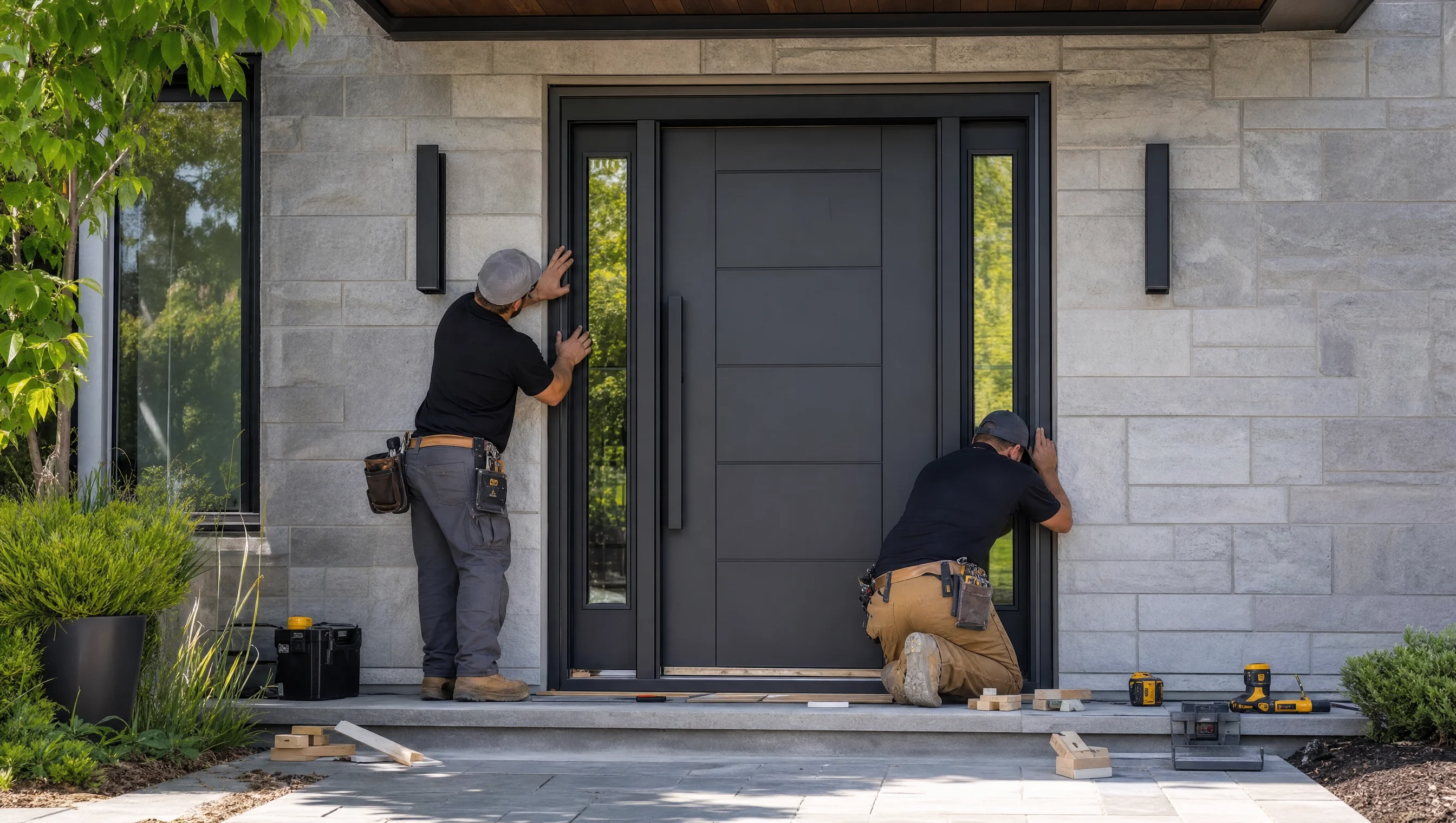
A new door is one of the highest-impact upgrades a Quebec home can make — better comfort, lower drafts and instant curb appeal. But installation day can feel mysterious if you have never watched a crew work. This guide walks you through everything from the morning prep to the final walk-through, so you know exactly what a professional install should look like.
Before the Crew Arrives
A smooth installation starts the day before. Clear a wide path from the curb to the doorway and remove anything within about a metre and a half of the opening on both sides — furniture, shelving, wall art, curtains and small décor. Installers carry heavy units and tools through that zone repeatedly, and an open workspace keeps both your belongings and the crew safe.
Plan for pets and people. The door will stand open for hours, often with power tools running, so arrange for curious pets to stay in a closed room and keep young children clear of the work area. In winter, the temporary loss of an exterior door means a noticeable temperature drop in nearby rooms, so dress warmly and close interior doors to contain the chill.
Finally, sort out parking and access. On Montreal, Laval and South Shore streets, a reserved spot near the entrance lets the crew unload safely and shortens the time the opening sits exposed. If you live in a condo or have a narrow driveway, let your installer know in advance so they can plan the approach.
- Clear a 1.5 m zone inside and outside the opening.
- Secure pets in a closed room; keep children clear.
- Reserve parking near the entrance for unloading.
- Remove curtains, blinds and wall art near the door.
Removing the Old Unit
The job begins with careful demolition. The crew removes the interior and exterior trim, then unscrews and pries the old frame free of the rough opening, taking care not to damage the surrounding wall, siding or finished surfaces. Patio doors involve lifting out heavy glass panels first, which is why these installs are a two-person job.
Once the old unit is out, the installer inspects the rough opening — the framed hole in the wall. In older Quebec homes it is common to find rot, water damage or insulation gaps hidden behind the original frame, especially at the sill where snowmelt collects. A good crew flags any damage to you on the spot and discusses repairs before proceeding.
This is also the moment to confirm the opening is square and properly sized for the new unit. Minor framing adjustments are normal. Skipping this inspection is how drafts and leaks return within a year, so a thorough crew never rushes it.
Prepping, Levelling and Shimming
With the opening clean, the installer dry-fits the new door to check the gap on all sides. The unit then has to be set perfectly level, plumb and square — this is the single most important step for long-term operation. A door that is even slightly out of level will bind, swing on its own or fail to seal, no matter how good the product is.
Installers use shims — thin tapered wedges — behind the frame at the hinges, strike point and sill to fine-tune position and support the weight without distorting the frame. They check level repeatedly with a long spirit level as they fasten, adjusting shims until the reveal around the door is even all the way around.
Patio doors demand extra attention to the sill, which must be fully supported and pitched correctly so water drains outward rather than pooling. Proper shimming here prevents the operating panel from dropping out of alignment over the years.
Flashing and Air-Sealing for Our Cold Climate
This is where a Quebec install earns its keep. Before sealing, the crew installs flashing — a weather-resistant membrane at the sill and jambs that directs any incidental water out and away from the framing. In our climate, with wind-driven rain and heavy snowmelt, flashing is what protects the wall structure for decades.
Next comes air-sealing the gap between the frame and the rough opening with low-expansion polyurethane foam. Low-expansion is critical: standard foam can expand with enough force to bow the frame and cause the door to bind. The foam fills voids that would otherwise channel cold air straight into your home, eliminating the winter draft that plagues poorly installed doors.
A complete cold-climate seal combines flashing, foam and a continuous interior air barrier, often finished with backer rod and sealant. Done right, this layered approach is the difference between a door that feels airtight at minus 25 and one that whistles. It is also where an experienced crew separates itself from a rushed job.
- Flashing membrane at sill and jambs to shed water.
- Low-expansion foam to insulate without bowing the frame.
- Interior air barrier for a continuous, draft-free seal.
- Backer rod and sealant to finish gaps cleanly.
Trim, Capping, Hardware and Caulking
With the unit sealed and secure, the crew moves to finishing. Interior trim and casing are installed and caulked to give a clean, integrated look, while exterior trim is fitted and often protected with aluminum capping — a custom-bent metal cladding that shields the wood beneath from Quebec weather and eliminates future painting.
Hardware comes next: handles, deadbolts, multi-point locking systems, weatherstripping and, on patio doors, the rollers and locking mechanisms. The installer adjusts the strike plates and lock engagement so the door latches smoothly and the weatherstrip compresses evenly, which is essential for both security and the airtight seal.
Finally, exterior caulking seals the joint between the capping and the siding against water intrusion. A tidy, continuous caulk line is a hallmark of careful work — it is both the last line of weather defence and the detail you will see every day.
Timing, Weather and Cleanup
A standard entry door replacement typically takes three to five hours for a single experienced crew, while a larger patio door, custom sidelights or structural surprises can stretch the job to most of a day. Your installer should give you a realistic window and keep you updated if the opening reveals hidden repairs.
Weather matters in Quebec. Reputable installers work year-round, but they sequence the job to minimize the time the opening sits fully exposed, and they avoid foaming and caulking in temperatures too cold for proper curing. Heavy rain or a deep cold snap may prompt a reschedule — a sign of a crew protecting your home, not cutting corners.
When the work is done, a professional crew cleans thoroughly: vacuuming debris, removing the old door and all packaging, and hauling away the waste. You should be left with a tidy entrance and no nails, offcuts or foam scraps underfoot.
Inspection, Walk-Through and Warranty
Before the crew leaves, insist on a walk-through. Open and close the door several times yourself to confirm it operates smoothly, latches securely and seals tightly with no visible gaps. Check that the lock engages cleanly, the weatherstrip meets the frame all around, and the interior and exterior finishes look clean and complete.
Ask the installer to explain care and maintenance: how to clean the finish, lubricate the hardware seasonally and keep the weatherstripping in good shape. Confirm the warranty terms in writing — both the manufacturer’s product coverage and the installer’s workmanship guarantee — and keep all documentation with your home records.
Above all, choose an RBQ-licensed installer. In Quebec, the Régie du bâtiment licence signals that the contractor meets provincial competency and accountability standards, which protects you if anything goes wrong. Browse our full range on the doors page and reach out through our contact page to book a licensed, experienced crew.
Frequently Asked Questions
How long does a door installation take?
A standard entry door usually takes three to five hours for an experienced crew, while patio doors or jobs with hidden repairs can stretch to most of a day. Your installer should give you a realistic time window in advance.
Can doors be installed in winter in Quebec?
Yes. Reputable crews install year-round, sequencing the work to limit how long the opening stays exposed and choosing the right products and sealants for cold curing. Extreme cold snaps or heavy storms may prompt a reschedule to protect quality.
What should I do to prepare for installation day?
Clear about 1.5 metres on both sides of the opening, remove curtains and wall art, secure pets in a closed room, and reserve parking near the entrance. Dress warmly in winter, since the opening will be exposed for several hours.
Why is air-sealing so important in our climate?
Quebec’s wind-driven rain, snowmelt and deep cold make flashing and low-expansion foam essential to stop drafts and protect the wall structure. A proper layered seal is the difference between a door that feels airtight at minus 25 and one that leaks.
Do I need an RBQ-licensed installer?
Strongly recommended. The Régie du bâtiment du Québec licence confirms the contractor meets provincial competency and accountability standards, which protects you and supports your warranty if any issue arises.
What should I check during the final walk-through?
Open and close the door several times to confirm smooth operation, secure latching and an even weatherstrip seal with no gaps. Confirm the warranty terms in writing and ask the installer to explain ongoing care and maintenance.