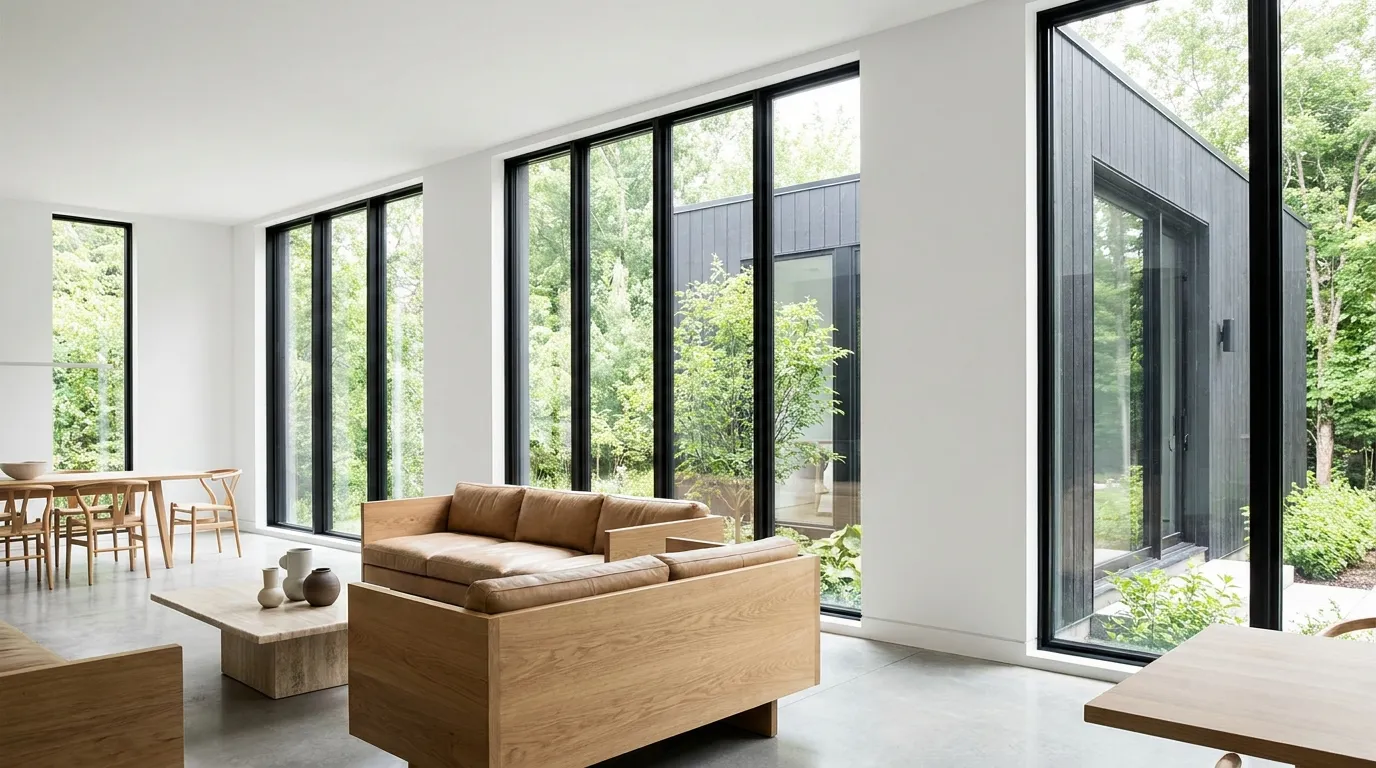
Black and dark window frames have gone from a bold designer statement to the default request on new builds and renovations across Quebec. They frame a view like a picture, sharpen a facade, and lend even a modest house an air of confident, modern restraint. But dark frames also raise real questions about heat, durability, and resale, and this guide walks through all of them so you can decide with your eyes open, not just because it is trending.
Why black frames took over
For decades the safe choice in Quebec was a white vinyl window, and it still sells by the thousands. But over the last few years black and near-black frames, charcoal, bronze, deep grey, have become the look people ask for by name. The appeal is partly the clean, architectural contrast a dark frame draws around each pane, and partly a broader move toward the modern farmhouse, industrial, and transitional styles that dominate design feeds.
A black frame does something a white one cannot: it recedes and reads as a crisp outline, so your eye goes to the view and the glass rather than the frame itself. On a facade, that same contrast gives a house definition and a sense of intention, turning ordinary punched openings into a deliberate composition. It is the single most requested aesthetic upgrade we see, and it works across everything from a downtown Montreal triplex to a suburban new build in the West Island.
Crucially, this is not a fad that will date the way a trendy paint colour might. Black is architecturally neutral, the way black trim, black hardware, and black light fixtures have quietly become standard. That neutrality is a big part of why homeowners are comfortable committing to dark frames on a component they expect to keep for twenty-five years or more.
The curb appeal payoff
Nothing modernizes a facade faster than swapping tired white frames for black ones. The change is immediate and dramatic: the windows suddenly read as intentional design features rather than functional holes in the wall, and the whole elevation looks more current and more expensive. For homeowners planning to sell or simply proud of their home, that first impression is worth a great deal.
Black frames also play beautifully with the materials trending on Quebec exteriors right now. They anchor white or light-grey siding with graphic contrast, echo the black metal of a modern roof or railing, and complement the warm wood tones showing up on soffits and accent walls. Pair them with black gutters, a black front door, and dark exterior lighting and you get a cohesive, high-end look for a fraction of a full facade renovation.
The effect is strongest when the frames are genuinely dark on the outside and the grid or muntin pattern is chosen to suit the home's era. A colonial or Victorian carries a divided-light grid in black elegantly, while a contemporary build looks best with clean, uninterrupted glass in a slim black frame. Matching the frame style to the architecture is what separates a considered result from one that merely follows the trend.
- Instantly modernizes a dated facade with graphic contrast.
- Pairs naturally with white siding, black roofs, railings, and warm wood accents.
- Reads as a deliberate, high-end design choice to buyers and guests.
- Grid pattern should suit the home's era, divided-light for traditional, clean glass for modern.
Interior versus exterior colour
One of the most useful things to know is that the inside and outside of a window frame do not have to match. Manufacturers routinely build a two-tone window: black or dark on the exterior for the curb appeal, and a different finish on the interior to suit the room. This flexibility is a major reason dark frames have spread so quickly, because you get the dramatic exterior without committing the whole interior to black.
The most popular combination in Quebec homes right now is black outside with white inside. It keeps interiors bright and airy, works with any wall colour or trim, and preserves resale-friendly neutrality indoors while still delivering the sharp black exterior. For a warmer or more contemporary interior, black-on-black frames the view like gallery art, and dark frames against white walls have become a signature of the modern interior look.
Wood or wood-look interiors are the third path, pairing a black exterior with a warm timber-toned inside for a Scandinavian or transitional feel. Because the interior colour touches how a room feels every day while the exterior touches curb appeal, treating them as two separate decisions, rather than one, usually leads to a happier result.
- Black outside, white inside: the popular default, bright interiors with a bold exterior.
- Black on black: frames the view like art, striking against white walls.
- Black outside, wood inside: warm, Scandinavian or transitional interior feel.
The heat question, honestly answered
The most common worry about dark frames is legitimate: black absorbs more solar heat than white, so a dark frame in direct summer sun runs hotter than a light one. This matters most for the frame material itself, and it is the reason a quality dark window is engineered differently from a bargain one. On a south- or west-facing wall taking Quebec's full July sun, an unsuitable dark frame can expand, warp, or stress its finish over time.
This is why the frame material matters more than ever with a dark colour. Fibreglass and aluminum handle heat and thermal expansion far better than standard vinyl, which is why premium dark windows are so often built on those frames or on vinyl specifically formulated and reinforced for dark exteriors. A reputable manufacturer will not sell you a dark finish on a frame that cannot take it, and that engineering is precisely what you are paying for.
It is worth being clear about what the heat does and does not affect. The dark frame absorbing sun does not meaningfully change your home's heating or cooling bill, since that is governed by the glass, the low-E coating, and the sealed unit, not the frame's colour. The heat concern is about the durability and warranty of the frame material, which is a solved problem when you buy a properly engineered dark window.
Durability of dark finishes
A dark frame's real test is how well its colour holds up under two decades of Quebec sun, and that comes down to the finish, not just the base material. On aluminum, a factory-baked or anodized finish resists fading and chalking for the long haul. On fibreglass, a factory-applied finish bonds tightly and is built to hold its colour. On vinyl, the dark colour needs to be a UV-stable, laminated or capstock finish rated for exterior dark exposure, not a cheap surface coat that will fade unevenly.
The reason this matters more for dark than for white is simple: fading shows dramatically on a black frame and barely at all on a white one. A quality dark finish comes with a finish warranty that specifically covers fade and colour retention, and that warranty is one of the clearest signals of whether a product is engineered for our climate. Ask for it in writing, because a confident manufacturer will stand behind the colour, not just the frame.
Maintenance is minimal but not zero. Dark frames show dust, pollen, and water spotting a little more than white, so an occasional wipe keeps them looking crisp, and that is essentially the extent of the upkeep on a properly finished dark window. What you want to avoid is a poorly finished dark frame that fades to a patchy, chalky grey, which is exactly what separates a premium dark window from a cut-rate one.
- Aluminum: baked-on or anodized finishes resist fade and chalking best.
- Fibreglass: factory finish bonds tightly and holds colour long term.
- Vinyl: insist on a UV-stable laminated or capstock finish rated for dark exteriors.
- Warranty: a genuine finish warranty covering fade is the key proof of quality.
Resale value and buyer appeal
Black frames are, at the moment, a resale asset rather than a liability. They photograph beautifully, which matters enormously when most buyers first meet a home through online listings, and they signal a renovated, current property before a buyer even walks in. In a competitive Montreal-area market, that stronger first impression can translate into more showings and a faster sale.
The safest way to protect resale is the two-tone approach: a bold black exterior for the listing-photo appeal, with a neutral white or wood interior that will not divide buyers over their own decor. This gives you the modern curb appeal that draws people in while keeping the interior broadly agreeable, which is the combination most likely to add value rather than narrow your buyer pool.
Because windows are a long-lived, expensive component, buyers also read newer frames as one less big-ticket item they will have to replace. A recent, well-finished window package, dark or not, reassures a buyer that the home has been maintained. Choosing a durable, properly warranted dark window is therefore not just an aesthetic decision but a practical one that supports the home's value.
How to pair dark frames with your facade
Dark frames are versatile, but they are not automatic, and matching them to your facade is what makes the difference. Against white or light-grey siding they deliver maximum graphic contrast and the clean modern look most people are after. Against brick, whether the classic red-brown of a Montreal duplex or a modern grey brick, black frames add crisp definition without fighting the masonry, which is why they suit so much of our existing housing stock.
On darker facades, charcoal siding, deep grey, or dark wood, a pure black frame can disappear, so a slightly contrasting dark bronze or a frame with a light interior reveal often reads better and keeps the windows from vanishing into the wall. The goal is definition, so if the frame and wall are too close in tone, you lose the very outline that makes dark frames appealing. A quick test is to hold a black sample against your actual siding in daylight before you commit.
The most cohesive results come from carrying the dark accent through the rest of the exterior, black or bronze door hardware, dark lighting, matching gutters and soffits, so the windows read as part of a considered whole rather than an isolated choice. If you are weighing dark frames for your home, explore our windows and request a quote to see samples against your own facade and pick the finish that will still look sharp in twenty years.
- White or light siding: maximum contrast, the classic modern look.
- Brick: crisp definition that suits Montreal's existing housing stock.
- Dark facades: use bronze or a light interior reveal so frames do not disappear.
- Carry it through: match door hardware, lighting, gutters, and soffits for a cohesive result.
Frequently Asked Questions
Do black window frames make a house hotter inside?
No, not meaningfully. Your home's heat gain and heating bill are governed by the glass, the low-E coating, and the sealed unit, not by the frame's colour. A dark frame does absorb more sun, but that affects the frame material's durability, which is why it should be a heat-tolerant fibreglass, aluminum, or properly engineered vinyl, not your comfort or energy costs.
Will a black window frame fade in the Quebec sun?
A properly finished one will not fade noticeably. Quality dark windows use baked-on, anodized, or UV-stable laminated finishes built to hold their colour for decades, and they come with a finish warranty covering fade. A cheap surface coat, by contrast, can fade to a patchy grey, which is exactly why the finish and warranty matter more on dark frames.
Can I have black outside and white inside?
Yes, and it is the most popular choice in Quebec homes. Windows are routinely built two-tone, with a dark exterior for curb appeal and a white or wood interior to keep rooms bright and resale-neutral. The inside and outside finishes are separate decisions, so you are not locked into black throughout.
Are black window frames good for resale value?
Right now, yes. They photograph well, which matters when buyers first see a home online, and they signal a renovated, current property. The safest approach for resale is a black exterior with a neutral white or wood interior, giving you the curb appeal without dividing buyers over interior decor.
Which frame material is best for a dark colour?
Fibreglass and aluminum handle the extra solar heat and thermal expansion of a dark finish best, and premium dark windows are often built on them. Vinyl can work well too, but only with a UV-stable, reinforced finish specifically rated for dark exteriors, so ask what the frame and finish are engineered for.
Do dark frames need more maintenance than white?
Only slightly. Dark frames show dust, pollen, and water spots a little more than white, so an occasional wipe keeps them crisp, and that is essentially the whole upkeep on a well-finished dark window. There is no painting or refinishing involved when the factory finish is a quality one.